
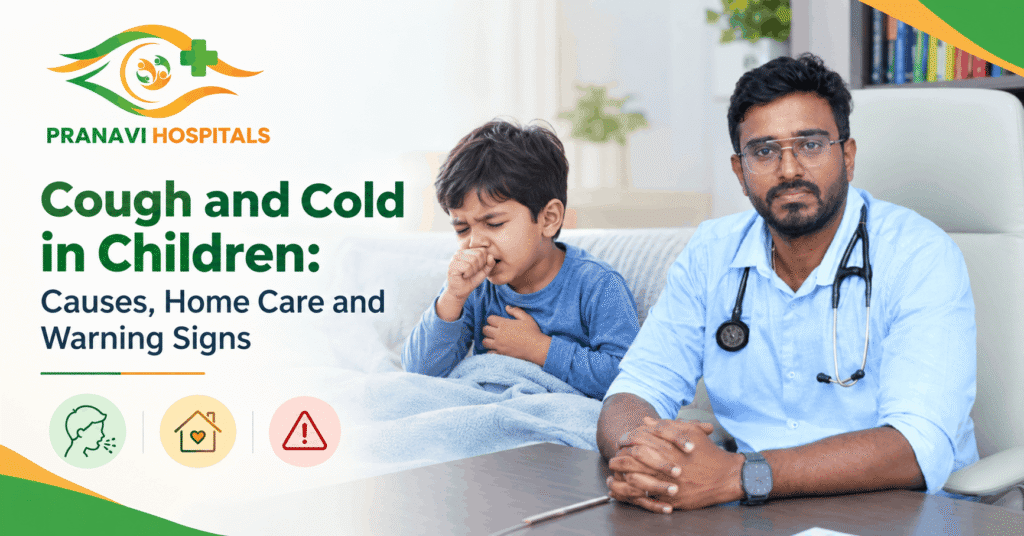
Cough and cold in children are usually caused by viral infections affecting the nose and throat. Common symptoms include a runny nose, sneezing, coughing and sometimes a mild fever. Most children recover with rest and supportive home care, but certain symptoms may require medical attention.
Children often catch colds through close contact with infected people, particularly at school or daycare. Although most colds are mild, parents should know which home-care measures are safe and how to recognise signs of a more serious illness.
This article explains the common causes and symptoms of cough and cold in children, how long they usually last, and ways to manage them at home. It also covers nighttime coughing, medicines to avoid, warning signs and when to consult a child specialist in Kandukur.
What Causes Cough and Cold in Children?
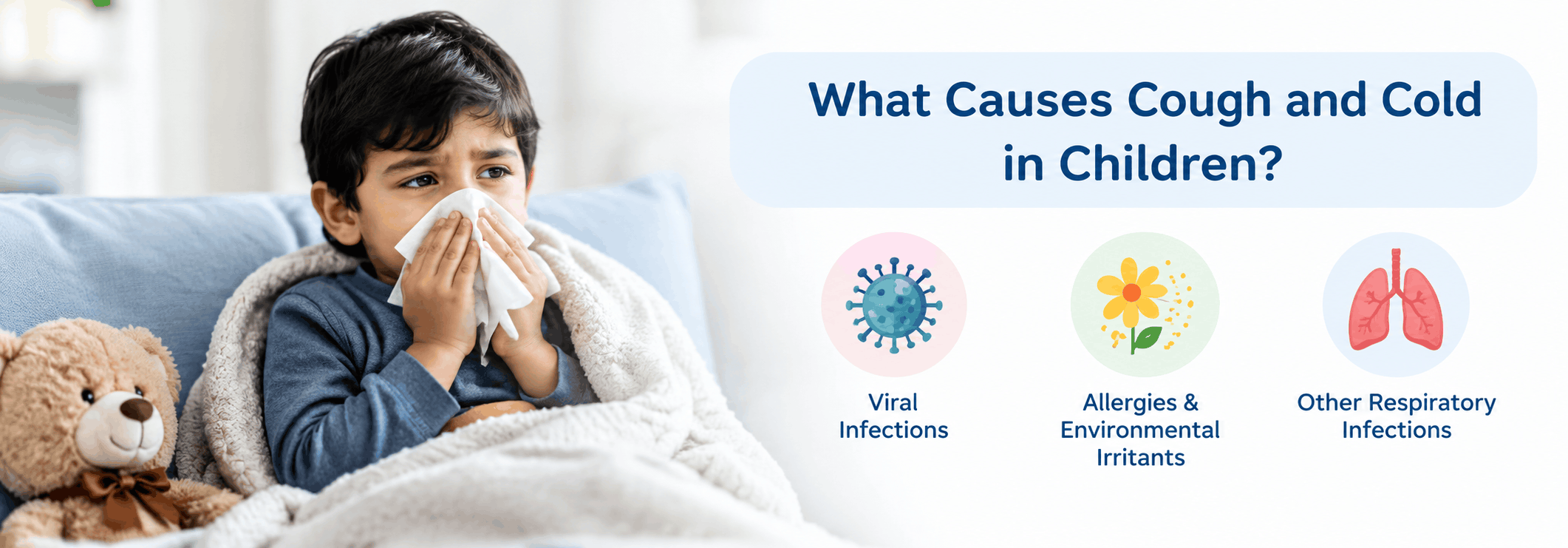
Cough and cold in children are most commonly caused by viruses that spread through respiratory droplets, close contact and contaminated hands or surfaces. Allergies and environmental irritants can also cause similar symptoms.
Viral Infections
Viruses are the leading cause of common colds in children. They inflame the nose and throat, causing sneezing, congestion, a runny nose and coughing. Children who attend school or daycare may catch infections more frequently because they spend time around other children. Among 200 children with cough, respiratory infections were the leading cause, followed by asthma and bronchitis; cold and fever were also common
Allergies and Environmental Irritants
Dust, pollen, smoke and air pollution can irritate a child’s airways and trigger coughing or sneezing. Allergies may also cause a runny nose and itchy eyes. Unlike a common cold, allergy symptoms may continue as long as the child is exposed to the trigger and usually do not cause a fever.
Other Respiratory Infections
Influenza, respiratory syncytial virus (RSV) and other respiratory infections can initially resemble a common cold. Some may cause additional symptoms, such as high fever, wheezing or breathing difficulties. Severe or worsening symptoms should be assessed by a healthcare professional.
Common Symptoms of Cough and Cold in Children
Symptoms can vary depending on the infection and the child’s age. Most children experience mild symptoms that gradually improve over several days.
Common symptoms include:
- Runny or blocked nose
- Sneezing and sore throat
- Dry or mucus-producing cough
- Mild fever
- Reduced appetite
- Tiredness or irritability
- Difficulty sleeping due to coughing or nasal congestion
Some children may also experience a mild headache or body aches. However, breathing difficulties, unusual drowsiness or poor fluid intake may indicate a more serious illness and should not be ignored.
How Long Does Cough and Cold Last in Children?
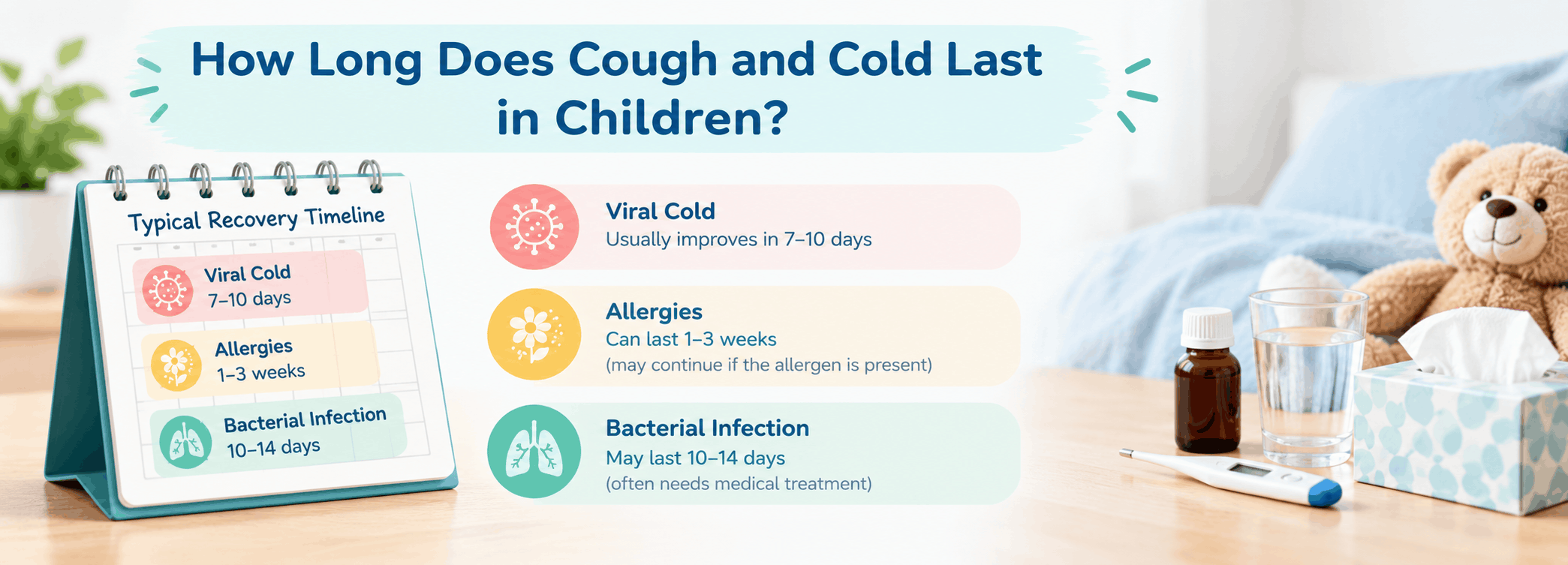
Most colds in children improve within 7–10 days, although a cough may last for two to three weeks. Recovery time varies depending on the infection and the child’s overall health.
Typical recovery timeline:
- First 2–3 days: A runny nose, sneezing and sore throat may develop.
- Days 4–7: Symptoms may gradually begin to improve.
- Days 7–10: Most cold symptoms start settling, although coughing may continue.
When should parents be concerned?
Consult a pediatrician if symptoms last more than 10 days without improvement, become worse after initially improving, or are accompanied by persistent fever. A baby younger than three months with a temperature of 38°C (100.4°F) or higher needs immediate medical assessment.
Why Does My Child’s Cough Get Worse at Night?
Some children cough more at night, even when other cold symptoms begin to improve. This may happen because of mucus drainage, dry air or irritation of the airways.
Mucus Drainage
When children lie down, mucus from a blocked or runny nose can drain down the back of the throat and trigger coughing.
Dry Air and Allergens
Dry indoor air, dust and other allergens may irritate the throat and airways, making coughing more noticeable at night.
Respiratory Infections
Common colds and other respiratory infections can cause a persistent cough that interferes with sleep.
How Can Parents Help?
Parents can try a few simple measures to make their child more comfortable at bedtime:
- Use saline nose drops to relieve nasal congestion.
- Keep the bedroom free from smoke and dust.
- Ensure the child gets enough fluids throughout the day.
- Offer a small amount of honey to children over one year old to soothe a cough. Never give honey to babies under 12 months.
If coughing regularly disturbs sleep or occurs with wheezing or persistent fever, consult a pediatrician. Seek emergency medical care if your child has difficulty breathing or bluish lips.
How to Care for a Child With a Cough and Cold at Home
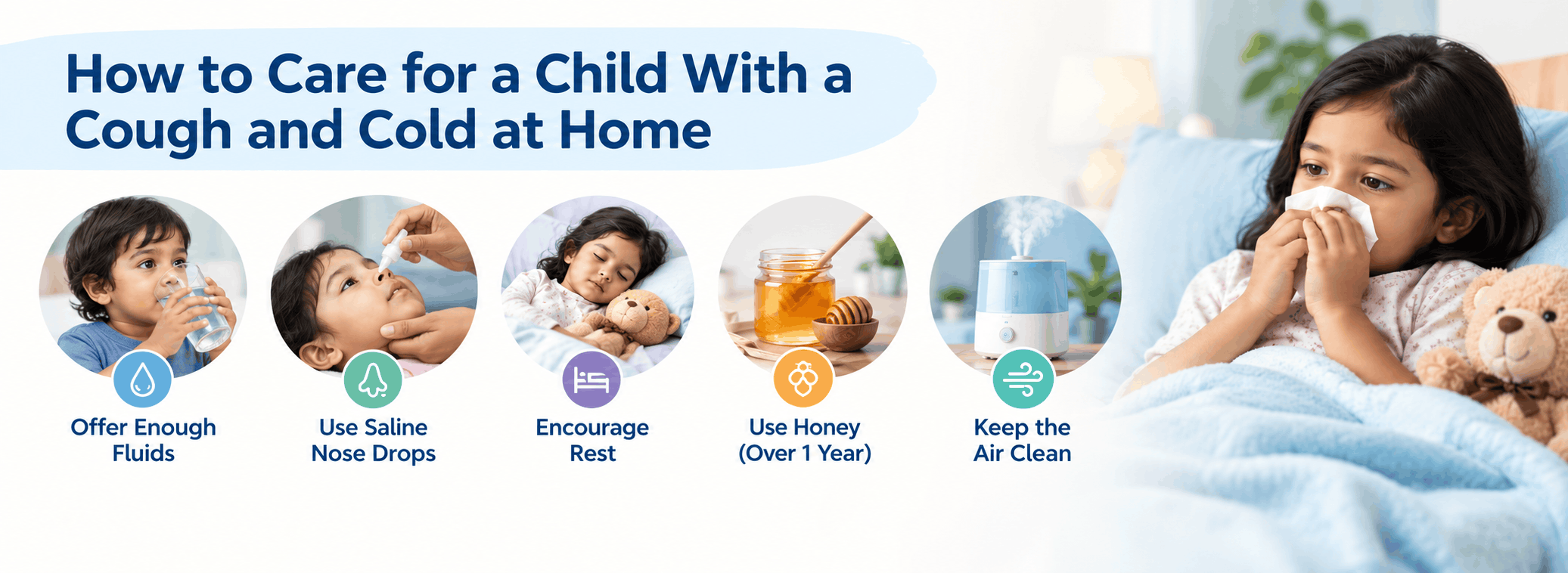
Most childhood colds improve on their own. The following home-care measures can relieve discomfort and help children stay hydrated and rested during recovery.
Offer Enough Fluids
Encourage your child to drink water regularly. Continue breastfeeding or formula feeding for babies. Smaller, more frequent feeds may help if nasal congestion makes feeding difficult.
Use Saline Nose Drops
Saline nose drops can loosen mucus and ease a blocked nose. For babies, gentle suction with an appropriate nasal aspirator may help clear the nose before feeding.
Encourage Rest
Allow your child to rest and get enough sleep. Keep the room comfortable and avoid exposure to cigarette smoke, dust and strong fragrances.
Use Honey for Children Over One Year
A small amount of honey may help soothe a cough, particularly at night. Never give honey to babies under 12 months because of the risk of infant botulism.
Keep the Air Clean
Avoid cigarette smoke and other airway irritants. A clean cool-mist humidifier may help if the air is dry. Avoid hot-water steam inhalation because it can cause serious burns.
Important: Consult a healthcare professional before giving cough and cold medicines to young children. Most common colds do not require antibiotics.
Warning Signs of Cough and Cold in Children
Although most childhood colds improve with time, some symptoms may indicate a more serious illness. Parents should pay close attention to changes in their child’s breathing, feeding, activity and temperature.
Signs That Need Immediate Medical Attention
Seek emergency medical care if your child has:
- Difficulty breathing, very fast breathing or pauses in breathing.
- Bluish or grey lips, tongue or face.
- Severe drowsiness or difficulty waking up.
- Inability to drink or swallow.
- Severe breathing difficulty, including the skin pulling inward around the ribs.
A baby younger than three months with a temperature of 38°C (100.4°F) or higher also needs immediate medical assessment.
Symptoms That Need a Doctor’s Evaluation
Arrange a medical assessment if your child has:
- Fever lasting more than four days.
- Cold symptoms lasting more than 10 days without improvement.
- Symptoms that improve and then become worse.
- Persistent wheezing or a cough that repeatedly interferes with sleep.
- Ear pain, poor feeding or fewer wet nappies than usual.
Medicines to Avoid When Children Have a Cough and Cold
Not every cough or cold needs medication. Some medicines may cause side effects in children, so parents should understand which treatments require caution.
- Over-the-counter cough and cold medicines: These are generally not recommended for children under six years unless advised by a healthcare professional. Recommendations vary by product and age.
- Antibiotics: Most common colds are caused by viruses, so antibiotics do not help. They should be used only when prescribed by a doctor for a suspected or confirmed bacterial infection.
- Adult medicines: Never give adult cold medicines to children without specific medical advice, as their ingredients or doses may be unsafe.
- Aspirin: Do not give aspirin to children unless specifically prescribed by a specialist.
Always follow the instructions for the specific medicine and your child’s age and weight. Avoid combining medicines that contain the same active ingredient, as this may cause accidental overdosing. Consult a pediatrician if you are unsure which treatment is suitable for your child.
How to Prevent Cough and Cold in Children
Cough and cold in children cannot always be prevented, but simple daily habits can reduce the spread of infections. Good hygiene, a clean environment and healthy routines can help protect children from common respiratory illnesses.
Tips to help prevent cough and cold in children:
- Wash hands regularly: Encourage children to wash their hands with soap and water, especially before eating.
- Cover coughs and sneezes: Teach children to use a tissue or their elbow.
- Avoid sharing personal items: Do not share cups, utensils or towels with someone who is sick.
- Keep the air clean: Avoid cigarette smoke and other respiratory irritants.
- Maintain healthy habits: Provide balanced meals, adequate fluids and sufficient sleep.
- Follow vaccination recommendations: Keep routine childhood vaccinations up to date, including the recommended flu vaccine.
When to Consult a Child Specialist in Kandukur

Most coughs and colds in children improve with home care. However, parents should consult a pediatrician if their child experiences:
- Fever lasting more than four days.
- Cold symptoms persisting beyond 10 days without improvement.
- A cough that worsens or repeatedly disturbs sleep.
- Wheezing, ear pain, or poor feeding.
- Frequent episodes of cough and cold.
Seek immediate medical attention for severe symptoms such as difficulty breathing, bluish lips, or unusual drowsiness. Babies under three months with a temperature of 38°C (100.4°F) or higher also need immediate medical assessment.
For parents looking for a child specialist in Kandukur, Dr. Naveen Kumar at Pranavi Children’s & Eye Hospital can be consulted for persistent or recurring coughs, colds, and other childhood symptoms. A timely evaluation can help identify the cause and guide appropriate care.
Frequently Asked Questions
1. What can I give my child for a cough and cold at home?
Offer age-appropriate fluids, encourage rest and use saline nose drops to relieve nasal congestion. Honey may help soothe a cough in children over one year old. Avoid giving cough and cold medicines without appropriate medical advice.
2. When should I worry about my child’s cough and cold?
Seek medical advice if symptoms worsen, fever persists, or your child has poor feeding or wheezing. Difficulty breathing, bluish lips or severe drowsiness require emergency medical care.
3. Why does my child keep getting coughs and colds?
Children often catch respiratory infections because they encounter many different viruses, especially at school or daycare. Frequent mild colds are common, but unusually severe, prolonged or recurring infections should be discussed with a pediatrician.
4. Can I send my child to school with a cough and cold?
If your child has a fever, feels very unwell or cannot participate comfortably, keep them at home. Follow the school’s illness policy and encourage good hand hygiene to reduce the spread of infection.
5. Do children need antibiotics for a cough and cold?
Most childhood colds are caused by viruses, so antibiotics do not help. A doctor may prescribe antibiotics if a bacterial infection is suspected or confirmed after evaluation.
6. Which child specialist should I consult for cough and cold in Kandukur?
Parents in Kandukur can consult Dr. Naveen Kumar at Pranavi Children’s & Eye Hospital for an evaluation of persistent, recurring or concerning symptoms. If a child has severe breathing difficulties or other emergency warning signs, seek emergency care rather than waiting for a routine appointment.
Conclusion
Cough and cold are common in children, and most get better with rest, enough fluids and simple home care. However, if your child has a fever that does not settle, a cough that keeps getting worse, or difficulty feeding, it is best to consult a pediatrician. Breathing difficulties or bluish lips need immediate medical attention.
If your child’s cough and cold keep coming back or are not improving, you can consult Dr. Naveen Kumar at Pranavi Children’s & Eye Hospital. A child specialist in Kandukur can assess your child’s symptoms and help you understand what care is needed.