

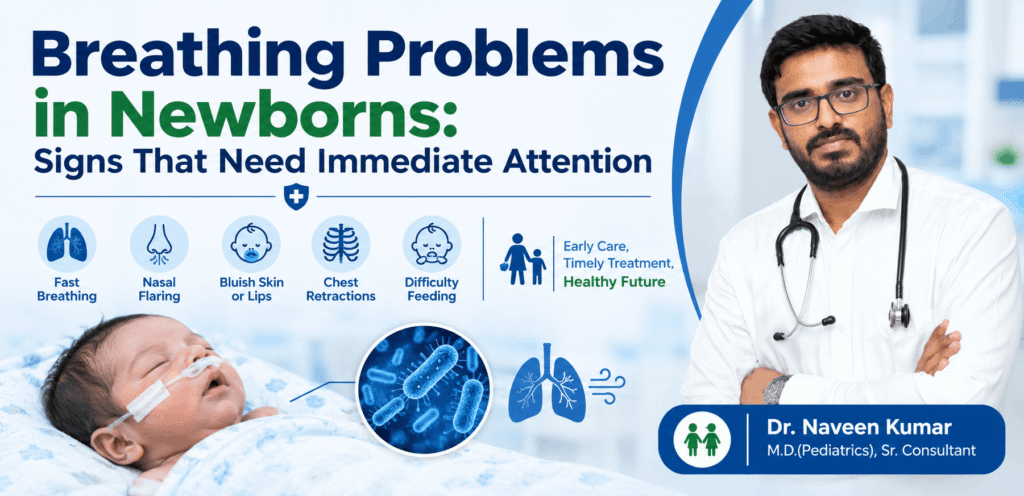
Breathing problems in newborns can sometimes be serious and may need immediate medical attention. Fast or difficult breathing, repeated grunting, flaring nostrils, chest pulling in, bluish lips or skin, and difficulty feeding are warning signs parents should not ignore.
Newborns can have changes in their breathing during the first few weeks, and some irregular patterns can be normal. However, when these signs continue or your baby appears uncomfortable, it is important to get them checked by a pediatrician.
Breathing difficulties are one of the common reasons newborns may need care in a NICU, with studies in India reporting that respiratory distress accounts for about 30% of NICU admissions. In this article, we’ll explain the common warning signs and causes, how doctors diagnose and treat them, and when you should seek medical care.
What Is Normal Breathing in a Newborn?

Newborns do not always breathe in a steady pattern like older children and adults. During the first few weeks, you may notice your baby breathing faster for a while and then returning to a slower pace. Short pauses between breaths can also happen, particularly when the baby is sleeping.
These changes are often normal if your baby remains comfortable and the breathing returns to a regular pattern. However, breathing that stays very fast, becomes noisy, or looks difficult needs to be checked.
It is also important to notice how your baby is feeding and behaving. If your baby struggles to feed, makes repeated grunting sounds, pulls in around the ribs while breathing, or develops a change in skin or lip color, seek the doctor immediately.
Signs of Breathing Problems
Some changes in a newborn’s breathing can be normal, but certain signs may indicate that your baby is struggling to breathe. Parents should look for changes in breathing, feeding, skin color, and overall behavior.
Common signs:
- Fast or rapid breathing: Breathing that remains unusually fast, especially when the baby is resting, can be a sign of respiratory difficulty.
- Grunting while breathing: Repeated grunting sounds may indicate that the baby is working harder to breathe and should be evaluated by a doctor.
- Nostrils flaring: Widening of the nostrils with each breath can indicate that the baby is putting extra effort into breathing.
- Chest pulling in: If the skin between or below the ribs pulls inward while the baby breathes, it may be a sign of increased breathing effort.
- Blue or gray lips and skin: A bluish or gray color around the lips, tongue, or skin can indicate low oxygen levels and requires immediate medical attention.
If your newborn is struggling to breathe, develops blue or gray lips or skin, has prolonged pauses in breathing, or is unusually difficult to wake, seek immediate medical attention.
What Causes Breathing Problems in Newborns?
Breathing problems can develop for many reasons. Some are related to the baby’s lungs not being fully developed, while others may be caused by infections or problems around the time of birth. Finding the cause helps doctors decide what treatment and breathing support the baby may need.
Premature Birth
Babies born prematurely may have breathing difficulties because their lungs are not fully developed. Their bodies may also produce less surfactant, a substance that helps keep the tiny air sacs in the lungs open. As a result, premature babies may need additional oxygen or respiratory support after birth. The level of support depends on the baby’s gestational age and overall condition.
Respiratory Distress Syndrome
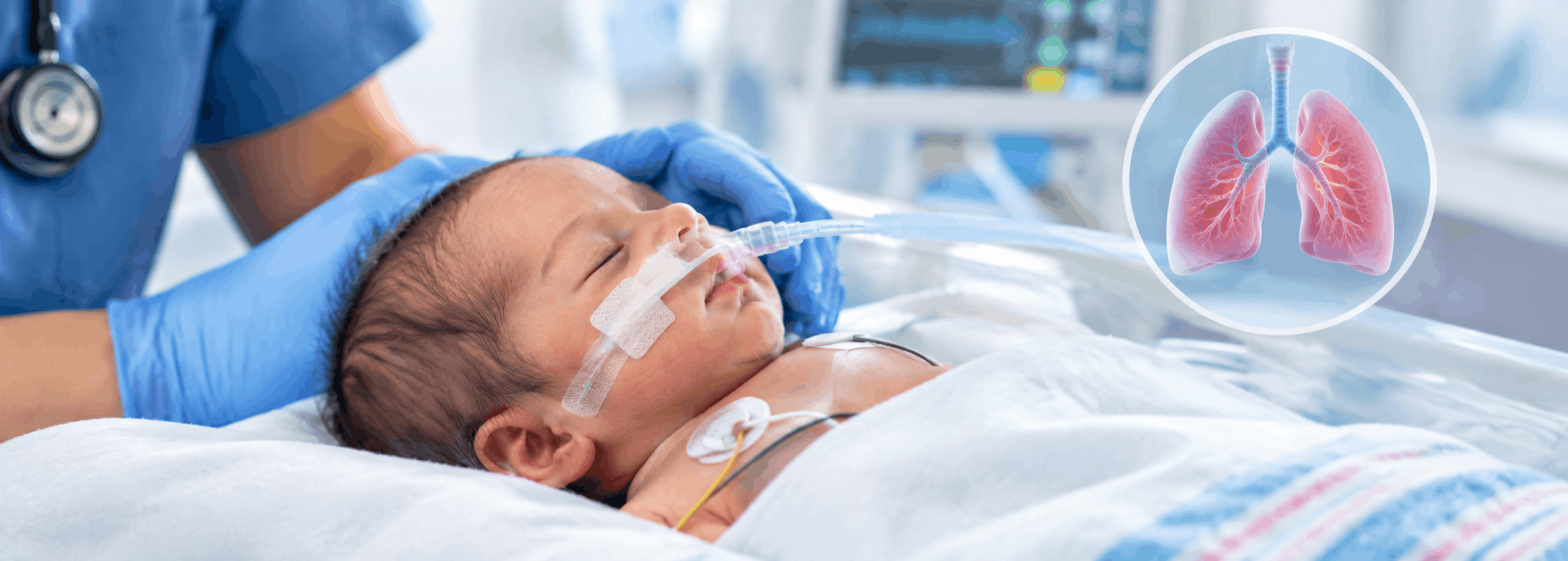
Respiratory distress syndrome (RDS) mainly affects premature babies whose lungs have not produced enough surfactant. Without sufficient surfactant, the lungs can become harder to expand, making breathing more difficult. Babies may develop fast breathing, grunting, or chest retractions. Depending on the severity, doctors may provide oxygen, surfactant treatment, or mechanical respiratory support.
Transient Tachypnea of the Newborn
Transient tachypnea of the newborn (TTN) occurs when excess fluid remains in a baby’s lungs after birth. This can cause the baby to breathe faster than normal and may sometimes be accompanied by mild respiratory distress. TTN is generally temporary and often improves as the lungs clear the excess fluid. Babies may still need observation, oxygen, or other supportive care until their breathing becomes comfortable.
Respiratory Infections
Newborns can develop respiratory difficulties due to infections such as pneumonia or other serious infections. An infection may affect the lungs and make it harder for the baby to breathe normally. Parents may also notice poor feeding, unusual sleepiness, temperature changes, or changes in behavior. Early medical evaluation is important because newborn infections can sometimes progress quickly.
Meconium Aspiration
Meconium aspiration can occur when a baby breathes in fluid containing meconium around the time of birth. The material can enter the baby’s airways and interfere with normal breathing. Some babies may develop rapid or difficult breathing soon after delivery. Depending on the baby’s condition, the medical team may provide oxygen, respiratory support, and close monitoring.
Heart or Lung Conditions
Some babies are born with conditions affecting the heart or lungs that can cause breathing difficulties shortly after birth. These problems may affect how effectively oxygen reaches the baby’s body or how well the lungs function. Symptoms can vary depending on the underlying condition and its severity. Babies with suspected heart or lung problems may require specialized testing and care from a neonatal or pediatric team.
How Are Breathing Problems in Newborns Diagnosed?
When a newborn is having trouble breathing, doctors first assess the baby’s overall condition and look closely at their breathing pattern. Depending on the symptoms, they may use different tests to understand what is causing the problem.
- A physical examination helps the doctor check the baby’s breathing rate, chest movements, heart rate, skin color, and signs such as grunting or pulling in of the ribs while breathing.
- A pulse oximeter is placed on the baby’s hand or foot to measure the oxygen level in the blood and check whether the baby is getting enough oxygen.
- A chest X-ray may be recommended when a lung problem is suspected. It can help identify conditions such as respiratory distress syndrome, pneumonia, or air trapped around the lungs.
- Blood tests and infection testing may be done when doctors suspect an infection or another condition affecting the baby’s breathing. These tests can help identify the possible cause and guide treatment.
- Blood gas analysis can provide more information about oxygen and carbon dioxide levels in the blood. This can be useful when a newborn has moderate to severe breathing difficulties.
- Continuous monitoring may be needed for newborns with more serious breathing problems. In a neonatal unit, doctors and nurses can closely monitor oxygen levels, heart rate, breathing rate, and how well the baby responds to treatment.
The tests used will depend on the baby’s symptoms and how severe the breathing difficulty is. Since newborns can become unwell quickly, early assessment and appropriate medical care are important.
How Are Breathing Problems in Newborns Treated?
Treatment depends on the cause of the breathing problem, the baby’s age and size, and how severe the symptoms are. Doctors first assess the baby’s breathing and oxygen levels before deciding on the appropriate support. At the same time, they treat the underlying condition that is making it difficult for the baby to breathe.
Oxygen Support

When a newborn has low oxygen levels, additional oxygen may be given to help maintain adequate oxygen in the blood. The baby is monitored closely throughout treatment, allowing doctors to adjust the oxygen according to the baby’s response. Some babies may need oxygen for only a short time, while others may require longer respiratory support depending on their condition.
Non-Invasive Breathing Support
Some newborns can breathe independently but need additional help to make breathing easier. In these situations, CPAP or NIPPV may be used to provide breathing support without immediately requiring a breathing tube. These methods can help keep the lungs open, improve oxygen levels, and reduce the effort needed to breathe. The baby’s breathing pattern and oxygen levels are monitored regularly to make sure the support is appropriate.
Mechanical Ventilation
When breathing difficulties are more severe, a newborn may not be able to maintain effective breathing without assistance. Mechanical ventilation can then be used to provide controlled breathing support while the medical team treats the underlying problem. The level of support is carefully adjusted according to the baby’s condition, oxygen requirements, and response to treatment.
Treating the Underlying Cause
Breathing support is only one part of treatment. Doctors also need to identify and manage the condition responsible for the breathing difficulty. For example, babies with certain infections may need appropriate medicines, while some premature babies with respiratory distress syndrome may require surfactant therapy. Depending on the baby’s needs, doctors may also provide fluids, nutritional support, temperature control, and other neonatal care.
When to Consult a Pediatrician

Some changes in a newborn’s breathing can be normal, especially during the first few weeks. However, parents should seek medical advice if their baby shows signs of difficulty or seems unwell.
Consult a pediatrician if your newborn has:
- Breathing that remains unusually fast
- Repeated grunting or unusual breathing sounds
- Nostrils flaring with each breath
- The chest pulling inward while breathing
- Difficulty feeding or stopping often to catch their breath
- Bluish or gray lips, tongue, or skin
- Pauses in breathing
- Unusual sleepiness or difficulty waking
- Symptoms that are getting worse
If your baby is struggling to breathe, has bluish or gray skin, or has prolonged pauses in breathing, seek immediate medical care.
If you’re looking for pediatric and neonatal care in Kandukur, Dr. Naveen Kumar at Pranavi Childrens and Eye Hospital provides care for newborns and children, including evaluation and management of breathing difficulties.
Choosing the Best Hospital for Newborn Breathing Problems
Choosing the right hospital is important when a newborn has breathing difficulties. A hospital with experienced pediatric and neonatal teams, appropriate respiratory support, and continuous monitoring can help ensure that babies receive timely and specialized care when they need it most.
When choosing a hospital for newborn breathing problems, consider:
- Experienced neonatal care team to assess and manage breathing difficulties in newborns.
- NICU facilities and continuous monitoring for babies who require closer observation and specialized care.
- Advanced respiratory support such as CPAP, NIPPV, and mechanical ventilation when required.
- Modern neonatal equipment such as the Drager Babylog VN500 to provide controlled respiratory support for babies who need assisted ventilation.
At Pranavi Hospitals, Dr. Naveen Kumar and and the neonatal care team provide specialized care for newborns with breathing difficulties. With the right facilities and close monitoring, babies can receive timely support and treatment based on their individual needs.
Frequently Asked Questions
1. How do I know if my newborn is breathing normally?
Newborns can have slightly irregular breathing, especially while sleeping. But very fast breathing, grunting, chest pulling, or a change in skin color should not be ignored.
2. What happens if my newborn needs help with breathing?
Depending on the baby’s condition, doctors may provide oxygen, CPAP, or NIPPV. Babies needing assisted ventilation may be supported with equipment such as the Drager Babylog VN500 and closely monitored by the neonatal team.
3. Is noisy breathing in a newborn normal?
Some newborns make small noises while breathing, which can sometimes be normal. However, persistent grunting, wheezing, or a harsh breathing sound should be evaluated by a doctor.
4. Can breathing problems happen in healthy newborns?
Yes, breathing difficulties can sometimes develop even when a baby appears healthy at birth. Premature birth, infections, and certain conditions present from birth can affect a newborn’s breathing.
5. Have premature babies with breathing problems been treated at Pranavi Hospitals?
Yes. Two premature twins weighing 1.2 kg and 1.1 kg were treated for moderate and severe respiratory distress. They received CPAP and NIPPV support with close monitoring in the NICU.
6. Who is the best pediatrician in Kandukur?
Dr. K. Naveen Kumar, M.D. (Pediatrics), is a consultant pediatrician and neonatologist at Pranavi Children’s Hospital & Eye Hospital, Kandukur, providing care for newborns and children.
7. Which is the best children’s hospital in Kandukur?
If you’re looking for children’s and neonatal care in Kandukur, Pranavi Children’s & Eye Hospital provides pediatric consultations, neonatal care, NICU support, and treatment for newborns with breathing difficulties.
Conclusion
Breathing problems in newborns can be worrying, especially when symptoms appear suddenly. Signs such as fast breathing, grunting, chest pulling, bluish skin, difficulty feeding, or pauses in breathing should not be ignored. Getting medical help early can make a big difference in your baby’s care and recovery.
If your newborn is having ongoing breathing difficulties or seems unusually tired, weak, or uncomfortable, speak to a pediatrician as soon as possible. Early evaluation can help find the cause and provide the right treatment when needed.
At Pranavi Children’s and Eye Hospital, Kandukur, Dr. Naveen Kumar and the pediatric team provide care for newborns and children. With pediatric and neonatal care facilities, the team focuses on timely diagnosis, appropriate treatment, and careful monitoring to support your baby’s health and well-being of every child.