
Cataracts can gradually make your vision cloudy or blurry, making everyday activities such as reading, driving, recognizing familiar faces, or watching television more difficult. Since cataracts usually develop slowly, you may not notice how much your vision has changed at first.
Cataract surgery is a procedure that removes the cloudy lens and replaces it with a clear artificial lens to help improve vision. It is usually considered when cataracts start affecting your daily activities or quality of life.
In this article, we’ll discuss when cataract surgery is needed, how the procedure is performed,the different types of cataract surgery, its benefits, recovery, possible risks, and how to choose the right ophthalmologist and hospital for your treatment.
What Is Cataract Surgery?
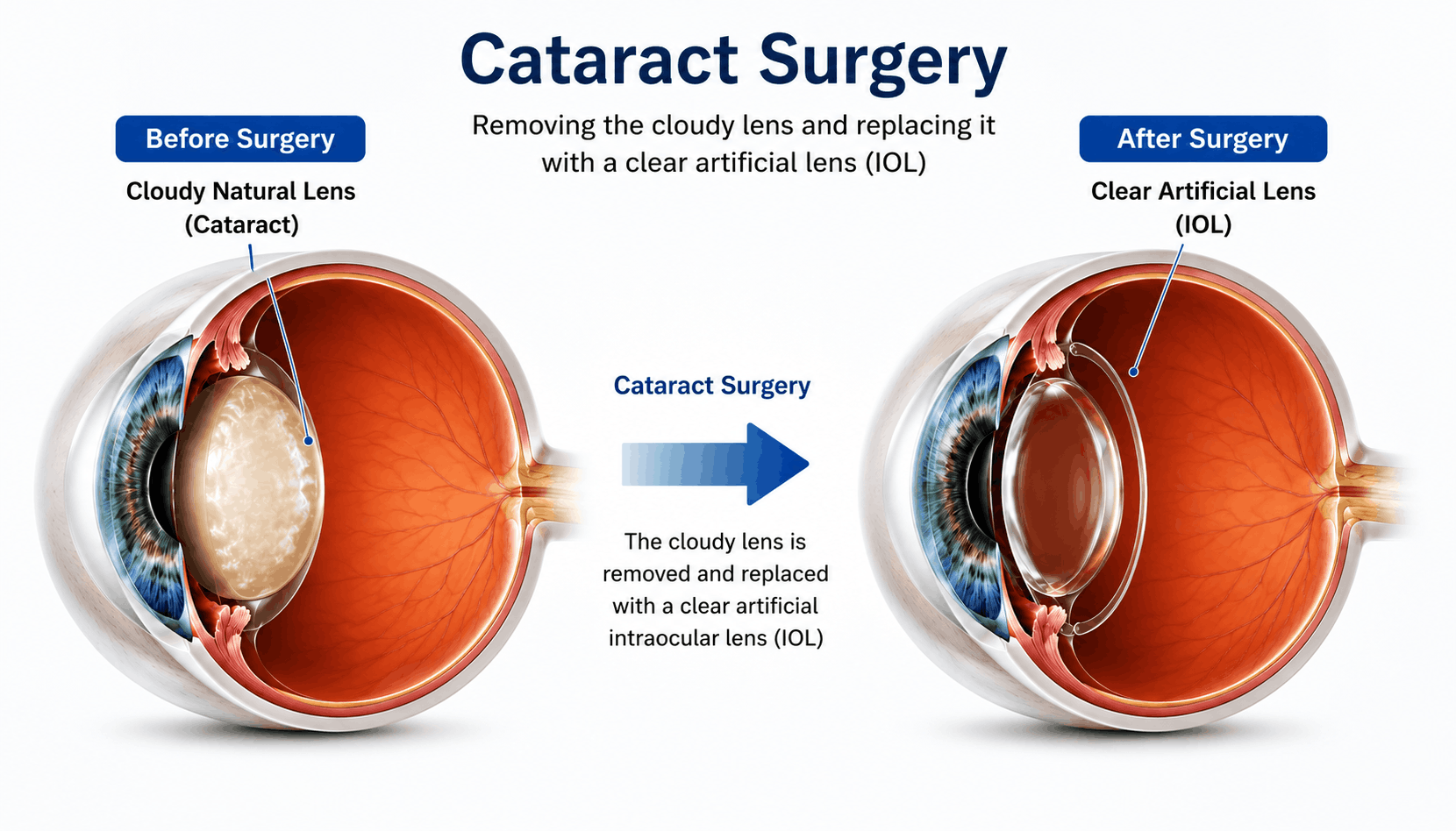
Cataract surgery involves removing the cloudy natural lens of the eye and replacing it with an artificial intraocular lens (IOL). The procedure is recommended when a cataract significantly affects vision and begins to interfere with everyday activities.
The need for surgery varies from person to person. Your ophthalmologist will consider the severity of the cataract, your visual needs, overall eye health, and how much the condition is affecting your daily life before recommending surgery. The type of IOL is also selected based on your eye condition and visual requirements.
Modern cataract surgery is generally performed under local or topical anesthesia using minimally invasive techniques. The procedure usually takes around 15 to 30 minutes, and most patients can return home the same day. Follow-up visits are important to monitor healing and visual recovery.
Who Needs Cataract Surgery?
The procedure is recommended for individuals whose cataracts begin to affect their vision and daily activities. Not everyone with cataracts requires immediate surgery, as the right time for treatment depends on the severity of the cataract, vision problems, and overall eye health. An ophthalmologist evaluates the condition of the eye and recommends surgery when it can significantly improve the patient’s quality of life.
You may need cataract surgery if you experience any of the following symptoms:
- Blurred or cloudy vision that affects daily activities.
- Difficulty reading, watching television, or using digital devices.
- Trouble seeing clearly at night or while driving.
- Increased sensitivity to bright lights or glare.
- Colors appearing faded or less vibrant.
- Frequent changes in your eyeglass prescription.
- Difficulty performing routine activities due to vision problems.
- Vision problems that affect your independence and quality of life.
A detailed eye examination by an experienced ophthalmologist helps determine whether the surgery is the right treatment option. Early consultation allows timely management of cataracts and helps protect your long-term eye health.
Types of Cataract Surgery
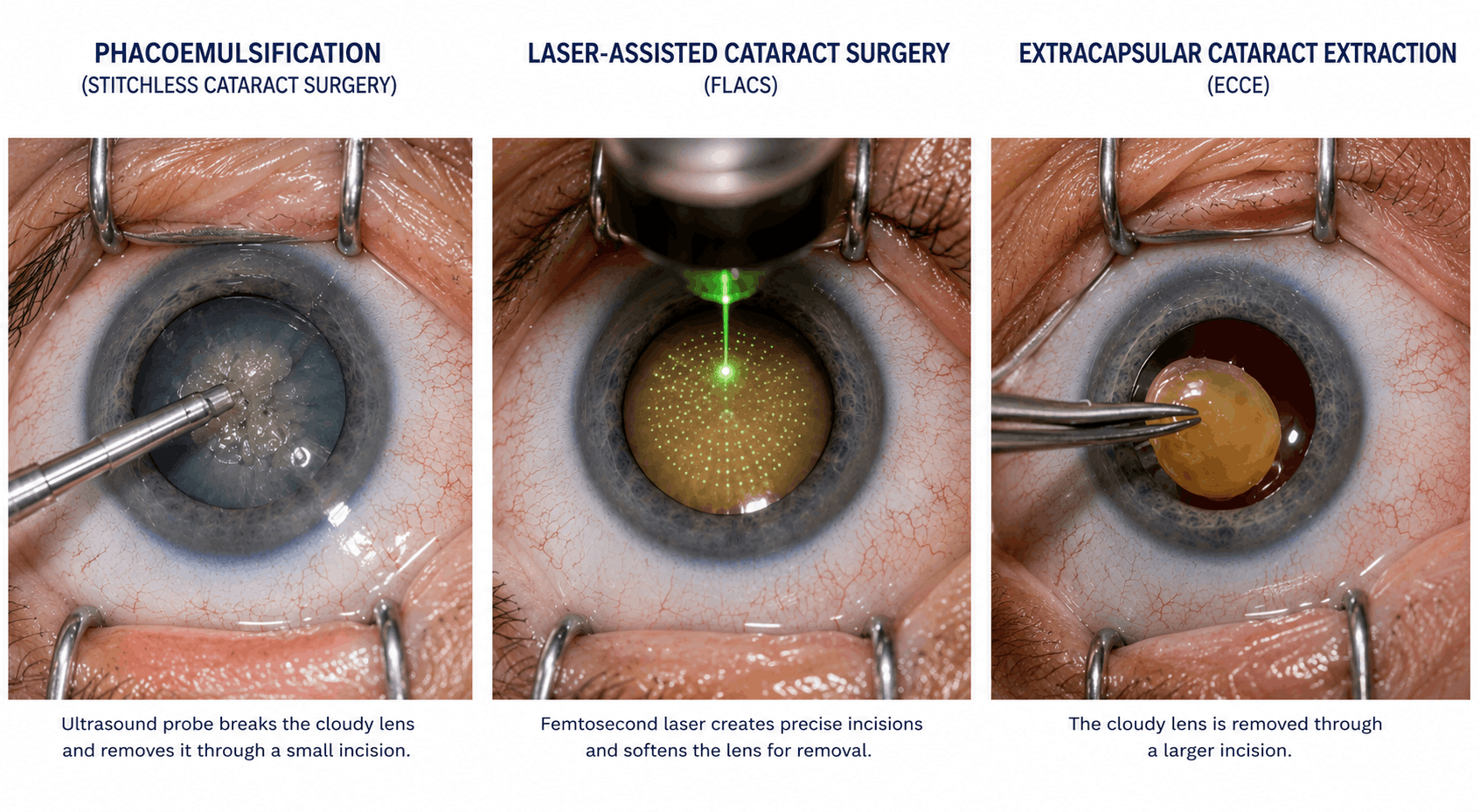
Modern treatment options include different surgical techniques, each designed to treat cataracts based on their severity, the patient’s eye condition, and visual needs. After a comprehensive eye examination, the ophthalmologist recommends the most suitable type of cataract surgery to achieve the best possible visual outcome.
1. Phacoemulsification (Stitchless Cataract Surgery)
Phacoemulsification is the most commonly performed and advanced technique for cataract surgery. It is a minimally invasive procedure that helps restore clear vision with faster healing and minimal discomfort.
- Uses ultrasound energy to break the cloudy lens into tiny fragments.
- Removes the fragmented lens through a small incision.
- Replaces the cloudy lens with a clear artificial intraocular lens (IOL).
- Usually does not require stitches because of the small incision.
- Performed under local anesthesia and typically completed within 15–30 minutes.
- Offers faster recovery and a high success rate.
2. Laser-Assisted Cataract Surgery (FLACS)
Laser-Assisted Cataract Surgery uses advanced femtosecond laser technology to perform certain steps of the procedure with greater precision. It may be recommended for selected patients based on their eye condition and the ophthalmologist’s evaluation.
- Uses a femtosecond laser to create precise incisions in the eye.
- Softens the cloudy lens before it is removed, reducing the need for ultrasound energy.
- Improves accuracy during key stages of the surgery.
- May be beneficial for patients with specific eye conditions.
- An artificial intraocular lens (IOL) is implanted to restore clear vision.
- Recommended based on the patient’s eye health and the ophthalmologist’s assessment.
3. Extracapsular Cataract Extraction (ECCE)
Extracapsular Cataract Extraction (ECCE) is a surgical technique typically recommended for advanced or mature cataracts that cannot be removed using phacoemulsification. Although it involves a larger incision, it remains a safe and effective treatment option for suitable patients.
- Recommended for advanced or mature cataracts.
- Involves removing the cloudy lens through a larger incision.
- Preserves the lens capsule to support the artificial intraocular lens (IOL).
- May require stitches, depending on the size of the incision.
- Recovery usually takes longer compared to phacoemulsification.
- Considered a safe and effective option when recommended by an ophthalmologist.
Benefits of Cataract Surgery
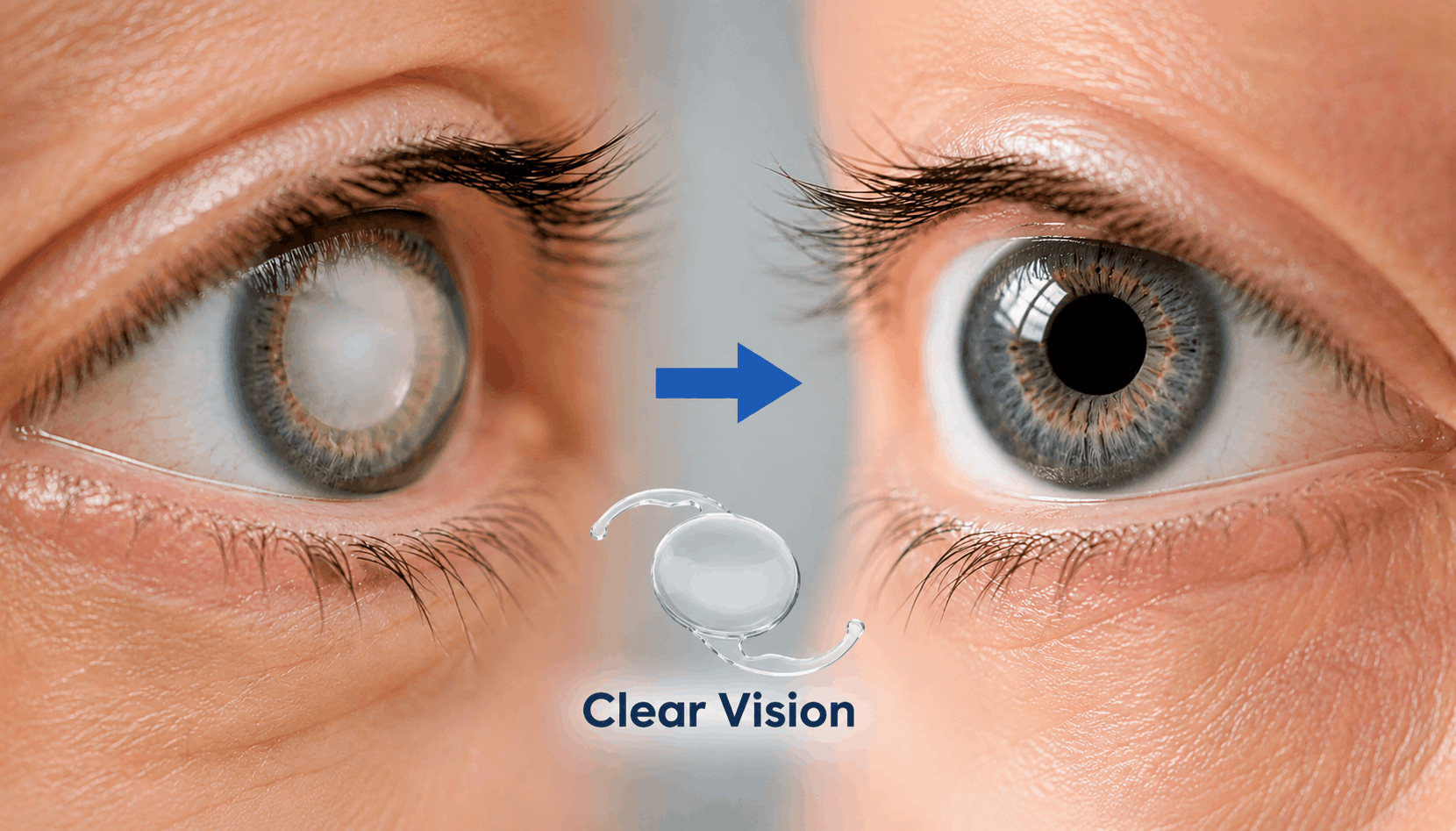
The eye surgery not only helps restore clear vision but also improves a person’s ability to perform daily activities with greater comfort and confidence. By replacing the cloudy natural lens with a clear artificial intraocular lens (IOL), cataract surgery helps patients experience better visual clarity and an improved quality of life.
1. Restores Clear and Sharper Vision
The primary benefit of this surgery is improved visual clarity. As cataracts progress, the cloudy lens blocks light from entering the eye properly, causing blurred or hazy vision. Removing the cataract and replacing it with an artificial lens helps patients see more clearly and improves their ability to perform daily activities.
2. Improves Daily Activities
Cataracts can make simple tasks such as reading, driving, using digital devices, and recognizing faces difficult. After the eye surgery, many patients experience better visual clarity, allowing them to return to their normal routines more comfortably.
3. Reduces Vision Problems
Cataracts can cause several vision-related problems, including glare from bright lights, difficulty seeing at night, and reduced color clarity. This procedure helps reduce these problems by replacing the cloudy lens with a clear artificial lens, allowing better light transmission into the eye.
4. Provides Long-Lasting Vision Improvement
The artificial intraocular lens (IOL) implanted during cataract surgery is designed to remain permanently in the eye. With proper post-operative care and regular eye check-ups, patients can enjoy long-lasting vision improvement.
5. Enhances Quality of Life
Clear vision plays an important role in maintaining independence, confidence, and an active lifestyle. By improving visual clarity, this surgery allows patients to participate more comfortably in personal, social, and professional activities.
How to Choose the Best Ophthalmologist for Cataract Surgery
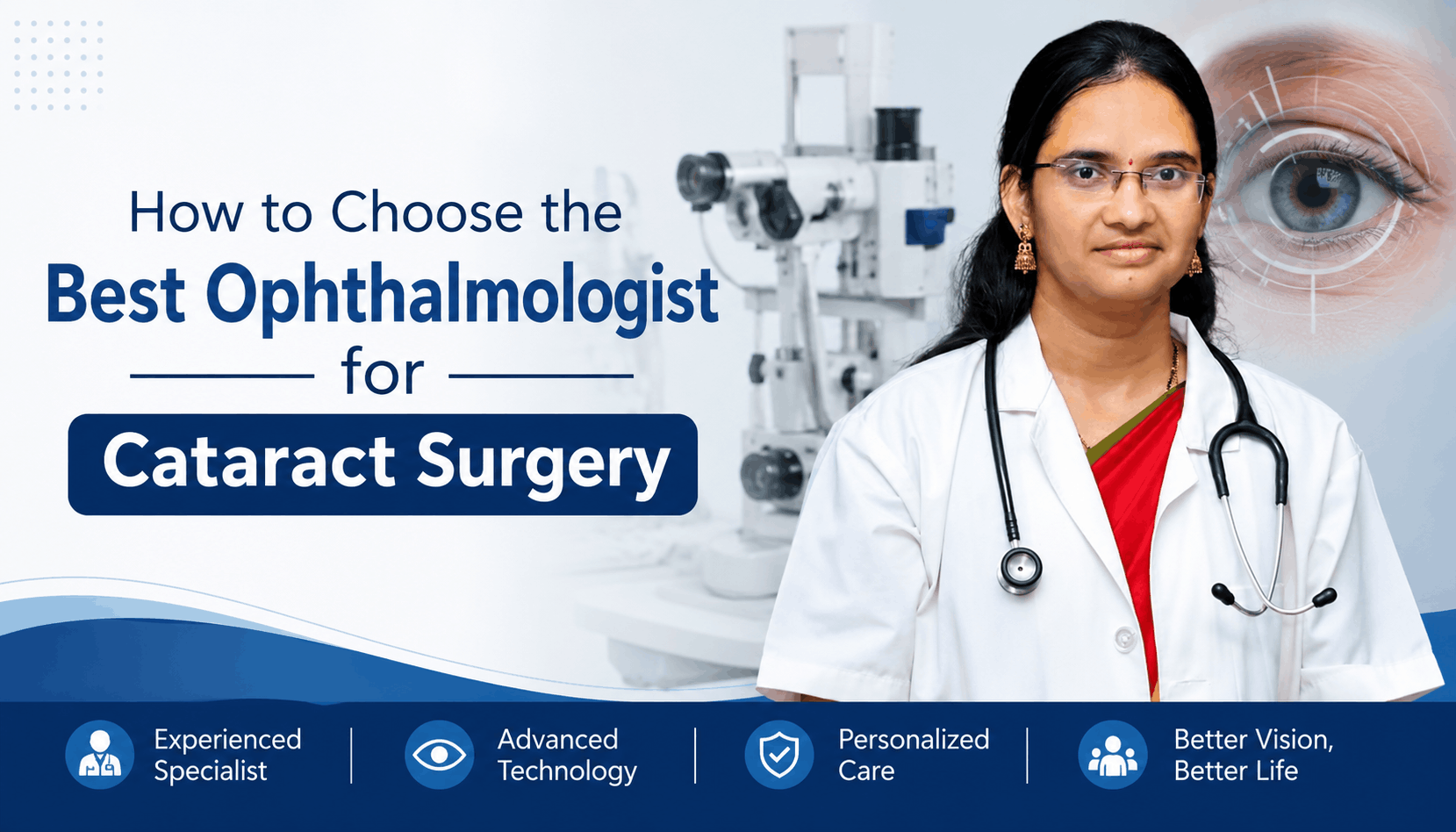
Choosing the right ophthalmologist is an important step for safe and successful treatment. An experienced eye specialist can evaluate your eye condition, recommend the right treatment approach, and provide proper guidance throughout the surgical process.
When choosing an ophthalmologist for cataract surgery, consider factors such as:
- Experience and expertise: An ophthalmologist with experience in cataract procedures can better understand different eye conditions and recommend suitable treatment options
- Qualifications and specialization: Reviewing the doctor’s education, training, and specialization helps ensure you receive care from a qualified eye specialist.
- Advanced technology and techniques: Modern diagnostic tools and surgical techniques help improve accuracy and provide better treatment outcomes.
- Patient care and follow-up support: A good ophthalmologist explains the procedure clearly, addresses patient concerns, and provides proper guidance after surgery.
Dr. Nalluri Prasanthi provides comprehensive cataract evaluation and personalized treatment guidance. The hospital offers advanced cataract surgery using modern microincisional phacoemulsification technology, a minimally invasive technique that uses a very small incision for cataract removal, helping support faster recovery and excellent visual outcomes.
Choosing the Best Hospital for Cataract Surgery
Choosing the right hospital is just as important as choosing the right ophthalmologist. A well-equipped eye hospital offers advanced technology, experienced specialists, and comprehensive patient care to ensure safe and better visual outcomes.
When it comes to cataract surgery in Kandukur, Pranavi Children & Eye Hospital is a trusted choice for comprehensive eye care. Led by Dr. Nalluri Prasanthi, M.B.B.S., M.S. (Ophthalmology), the hospital is committed to providing personalized treatment using modern cataract surgery techniques.
At Pranavi Children & Eye Hospital, patients receive:
- Comprehensive eye examinations for accurate cataract diagnosis.
- Advanced microincisional phacoemulsification technology for safe and minimally invasive cataract surgery.
- Personalized treatment plans based on each patient’s eye condition and visual needs.
- Complete post-operative care and follow-up to support smooth recovery and long-term vision improvement.
With its patient-centered approach, advanced technology, and compassionate care, Pranavi Children & Eye Hospital is a trusted destination for safe and effective cataract surgery in Kandukur.
Frequently Asked Questions
1. What is cataract surgery?
Cataract surgery is a procedure used to remove the cloudy natural lens of the eye and replace it with a clear artificial intraocular lens (IOL). This helps restore clear vision and improve daily activities affected by cataracts.
2. When should I consider cataract surgery?
This procedure is recommended when cataracts begin to affect your daily life, such as difficulty reading, driving, recognizing faces, or performing routine activities. An ophthalmologist can determine the right time for surgery after a complete eye examination.
3. Is cataract surgery painful?
This surgery is generally a painless procedure performed under local anesthesia. Most patients experience minimal discomfort during and after the surgery.
4. How long does cataract surgery take?
Modern cataract surgery usually takes around 15 to 30 minutes. Most patients can return home on the same day after the procedure.
5. Will I need glasses after cataract surgery?
The need for glasses after cataract surgery depends on the type of intraocular lens (IOL) chosen, your eye condition, and your visual requirements. Your ophthalmologist will guide you in selecting the most suitable lens option.
6. Can cataracts come back after surgery?
No, cataracts cannot come back after surgery because the cloudy natural lens is removed. However, some patients may develop clouding of the lens capsule, which can be treated with a simple laser procedure.
7. Who is the best ophthalmologist for cataract surgery in Kandukur?
Dr. Nalluri Prasanthi, M.B.B.S., M.S. (Ophthalmology) at Pranavi Children & Eye Hospital, Kandukur, provides expert cataract evaluation and personalized treatment guidance to help patients achieve better vision.
8. Which is the best hospital for cataract surgery in Kandukur?
Pranavi Children & Eye Hospital, Kandukur provides comprehensive cataract evaluation, advanced eye care facilities, and personalized treatment to help patients receive quality cataract care.
Conclusion
Cataracts can gradually affect your vision and make everyday activities more challenging, but early diagnosis and timely treatment can help restore clear vision and improve your quality of life. If you experience symptoms such as blurred vision, difficulty reading, trouble driving at night, or increased sensitivity to light, consult an ophthalmologist for a comprehensive eye examination.
For expert cataract evaluation and advanced treatment, Dr. Nalluri Prasanthi, M.B.B.S., M.S. (Ophthalmology) at Pranavi Children & Eye Hospital, Kandukur provides personalized care using modern cataract surgery techniques to help patients achieve clearer vision and a smoother recovery.