

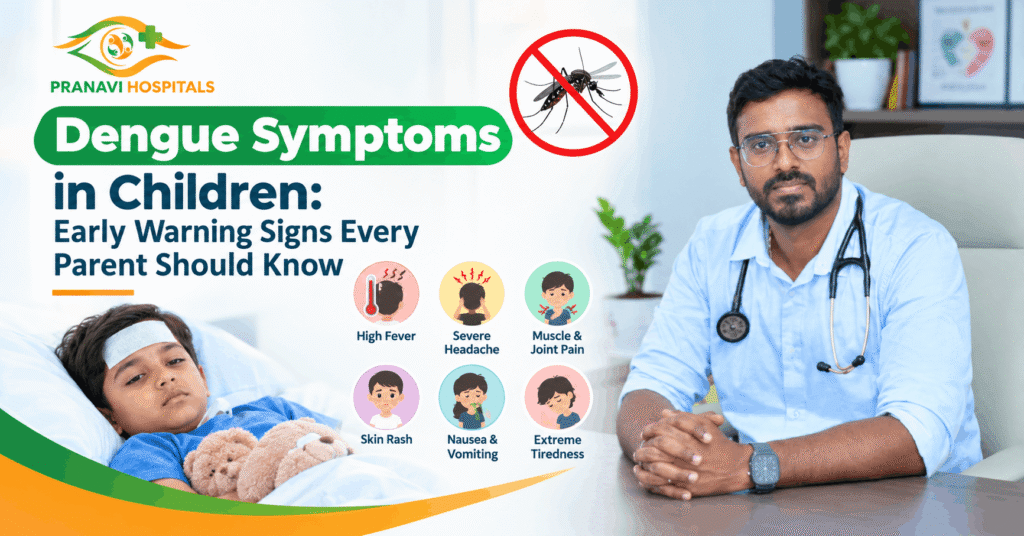
Dengue symptoms in children commonly include sudden fever, headache, body aches, tiredness, nausea, vomiting, and sometimes a skin rash. Parents should also be aware of warning signs such as severe abdominal pain, repeated vomiting, bleeding, unusual sleepiness, breathing difficulty, or reduced urination.
Dengue is a mosquito-borne viral infection that can initially look like a common viral fever. In younger children, it may be harder to recognise because they may not be able to clearly describe what they are feeling.
Knowing what to look for can help parents monitor their child and seek medical attention at the right time. This guide explains the early symptoms of dengue, warning signs, diagnosis, treatment, food and fluids, prevention, and when to consult a pediatrician.
What Is Dengue?
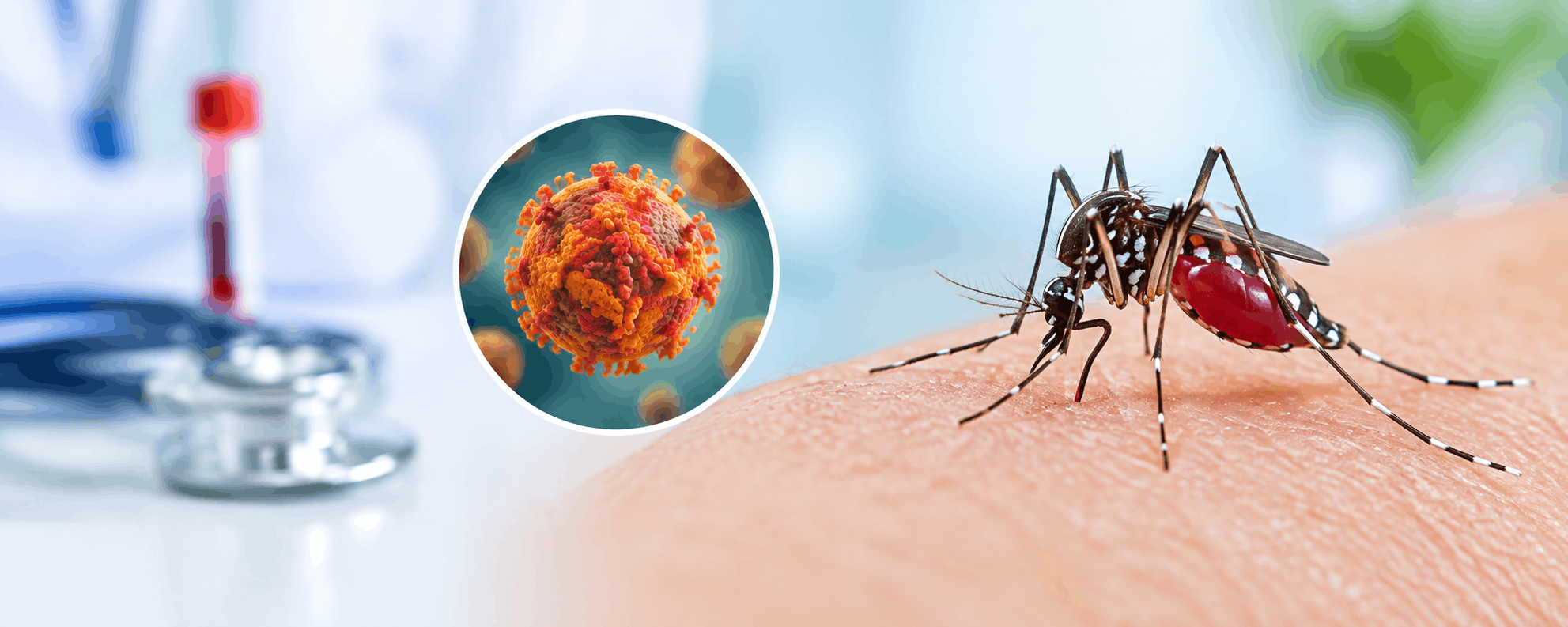
Dengue is a viral infection spread through the bite of an infected Aedes mosquito. It is common in tropical and subtropical regions, where these mosquitoes can breed in and around homes.
Children can develop dengue after being bitten by an infected mosquito. Symptoms may include sudden fever, headache, body aches, tiredness, nausea, vomiting, and skin rash. In babies and younger children, poor feeding, irritability, increased crying, or unusual sleepiness may be easier to notice.
Many people recover with supportive care, but some children can develop severe dengue and need closer medical attention. Recognising changes in your child’s condition is therefore important throughout the illness.
What Are the Early Symptoms of Dengue in Children?
Dengue often begins suddenly, with fever being one of the first symptoms parents notice. A child may also become less active, lose interest in food, or seem generally unwell.
Common symptoms include:
- Sudden fever: Fever may appear quickly and continue for several days.
- Headache: Older children may complain of a headache or pressure in the head.
- Body and muscle aches: Children may seem uncomfortable or complain of muscle or joint pain.
- Tiredness and weakness: A normally active child may become quieter, sleepy, or less interested in playing.
- Nausea or vomiting: Some children may feel sick or vomit, which can make drinking and eating more difficult.
- Loss of appetite: Your child may eat less than usual or refuse meals.
- Skin rash: A rash can appear during the illness in some children.
- Pain behind the eyes: Older children may describe discomfort around or behind their eyes.
These symptoms can vary from one child to another. A study of children hospitalized with dengue found that fever was the most common symptom, while vomiting and abdominal pain were also frequently reported.
In babies and younger children, symptoms may be less specific. Poor feeding, irritability, unusual sleepiness, or reduced activity may be noticeable. Since these signs can occur with other infections too, seek medical advice if dengue is suspected.
Which Dengue Warning Signs Should Parents Never Ignore?
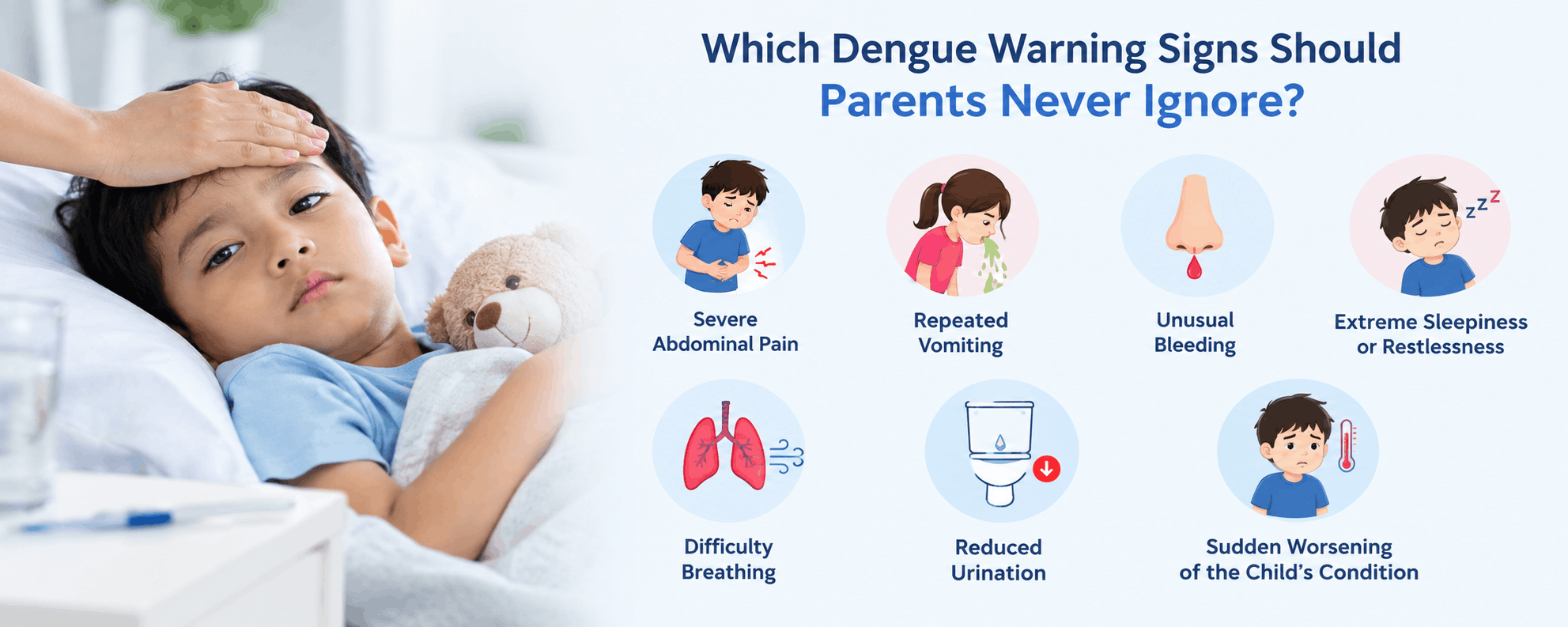
Most children with dengue do not develop severe illness, but the condition can sometimes worsen. Warning signs may become noticeable around the time the fever starts to improve, so a lower temperature does not always mean the illness is over.
Severe Abdominal Pain
Persistent or severe stomach pain can be a warning sign that the illness is becoming more serious. If your child has significant abdominal pain, especially along with vomiting or increasing weakness, contact a doctor promptly.
Repeated Vomiting
Frequent or repeated vomiting can make it difficult for your child to drink enough fluids and stay hydrated. If your child cannot keep fluids down or continues vomiting, seek medical advice.
Unusual Bleeding
Watch for bleeding from the nose or gums, unusual bruising, or blood in vomit or stool. These signs should not be ignored and require prompt medical attention.
Extreme Sleepiness or Restlessness
If your child becomes unusually sleepy, difficult to wake, confused, very restless, or unusually irritable, this may indicate that they need medical assessment. Pay attention to any sudden change from your child’s usual behaviour.
Difficulty Breathing
Fast, difficult, or uncomfortable breathing is an important warning sign. If your child appears to be struggling to breathe, seek urgent medical care rather than waiting for other symptoms to appear.
Reduced Urination
If your child is urinating much less than usual, it may indicate dehydration or another complication. Keep track of how often your child is passing urine, particularly if they are drinking less or vomiting.
Sudden Worsening of the Child’s Condition
Sometimes a child may suddenly appear much weaker or more unwell even if the fever has started to improve. Pale or cold skin, marked weakness, or a noticeable change in your child’s overall condition should be taken seriously and assessed by a doctor.
How Is Dengue Diagnosed in Children?
Dengue cannot be confirmed by symptoms alone because fever, body aches, vomiting, and tiredness can also occur with other childhood infections.
A pediatrician may consider your child’s symptoms, physical examination, how long the illness has been present, and possible exposure to dengue before deciding whether testing is needed.
What Tests Are Used to Diagnose Dengue?
Depending on the stage of the illness, a doctor may recommend blood tests such as:
- NS1 antigen test: Can help detect dengue infection, particularly during the early stage.
- Dengue antibody tests: Can help identify the body’s immune response to dengue.
- Complete Blood Count (CBC): Helps monitor platelet levels, white blood cells, and other blood changes.
A doctor may recommend repeated blood tests when needed to follow the child’s condition. Test results are interpreted together with symptoms, examination findings, and the child’s overall health
How Is Dengue Treated in Children?
There is no specific medicine that cures dengue. Treatment mainly focuses on maintaining hydration, managing fever and discomfort safely, getting enough rest, and monitoring for changes.
Keep Your Child Hydrated

Offer small, frequent amounts of fluids such as water or oral rehydration solution, according to medical advice. If your child keeps vomiting or cannot drink enough, contact a pediatrician.
Encourage Rest
Let your child rest and avoid strenuous activity while recovering. Normal activities can gradually resume as their energy returns.
Use Medicines Only as Advised
Give fever or pain medicine only according to your pediatrician’s advice and the recommended dose for your child’s age and weight.
Avoid aspirin and ibuprofen unless specifically advised by a doctor, as they may increase the risk of bleeding when dengue is suspected.
Monitor Your Child’s Recovery
Keep an eye on drinking, urination, appetite, activity, and general behaviour. If your child’s condition changes suddenly or warning signs appear, seek medical care promptly.
What Should Children Eat and Drink During Dengue?
Keeping a child well hydrated is especially important during dengue. Appetite may be lower than usual, so offer small portions and allow your child to eat according to their tolerance.
| Food or Drink | Why It Can Help |
| Water | Helps maintain hydration |
| Oral rehydration solution (ORS) | Helps replace fluids and electrolytes |
| Clear soups | Provides fluids and some nutrition |
| Rice or soft porridge | Gentle and easy to eat |
| Khichdi | Provides carbohydrates and is usually easy to digest |
| Banana | Soft, easy to eat, and provides energy |
| Soft, easy-to-eat fruits | Provides fluids and nutrients |
| Curd or yogurt | Provides protein and may be easy to tolerate |
A Simple Tip for Parents
There is no need to force your child to finish a full meal. Small, frequent meals and regular fluids may be easier to manage when appetite is low. If vomiting continues or your child cannot drink enough, seek medical advice.
How Can Parents Prevent Children From Dengue?
Preventing mosquito bites and reducing mosquito breeding around the home are important ways to lower the risk of dengue.
Tips to Prevent Dengue in Children
- Use mosquito nets and age-appropriate repellents: Choose products suitable for your child’s age.
- Cover exposed skin: Long sleeves and full-length clothing can reduce exposed skin.
- Remove standing water: Empty and clean buckets, coolers, containers, plant trays, and other places where water collects.
- Keep stored water covered: Use properly covered containers for household water.
- Protect children during the day: Aedes mosquitoes can bite during daylight hours, so protection is important throughout the day.
When Should Parents Consult a Pediatrician for Dengue?

If your child develops a sudden fever and you are concerned about dengue, speak with a pediatrician. The need for testing depends on the child’s symptoms, how long they have been unwell, possible mosquito exposure, and the doctor’s assessment.
Medical advice is particularly important if:
- Fever continues or returns.
- Your child is drinking less or shows signs of dehydration.
- Vomiting becomes frequent.
- Your child becomes unusually weak, sleepy, or irritable.
- Warning signs develop.
- Dengue is currently common in your local area.
The timing and type of dengue test can depend on how many days the child has had symptoms.If you are concerned about your child’s condition, Dr. K. Naveen Kumar, M.D. (Pediatrics), Sr. Consultant, can provide pediatric evaluation and guidance at Pranavi Children and Eye Hospital, Kandukur.
Frequently Asked Questions About Dengue in Children
1. What are the first signs of dengue in a child?
A sudden fever is often one of the first signs. Children may also develop headache, body aches, tiredness, nausea, vomiting, reduced appetite, or a skin rash.
2. How do I know if my child’s fever could be dengue?
Fever alone cannot confirm dengue because many childhood infections cause similar symptoms. If fever occurs with vomiting, body aches, rash, unusual tiredness, or other concerning symptoms, consult a pediatrician for proper evaluation.
3. Can a child have dengue without bleeding?
Yes. Bleeding does not occur in every child with dengue. Other symptoms and warning signs should also be monitored.
4. Can dengue become serious in children?
Yes. Some children can develop severe dengue. Severe abdominal pain, repeated vomiting, bleeding, difficulty breathing, unusual sleepiness or restlessness, and reduced urination require prompt medical attention.
5. Does a low platelet count always mean dengue?
No. A low platelet count can occur with several infections and conditions. Dengue diagnosis is based on the child’s symptoms, examination, appropriate testing, and overall condition—not platelet count alone.
6. Can dengue happen more than once?
Yes. A person can get dengue more than once because there are different dengue virus types. A previous dengue infection does not provide complete protection against future infections.
7. When should I take my child to a pediatrician for dengue?
If your child has persistent fever, vomiting, unusual tiredness, or poor fluid intake, it’s best to get medical advice. Dr. K. Naveen Kumar can assess your child and guide you on the next steps.
8. Which hospital treats dengue in children in Kandukur?
Pranavi Children and Eye Hospital, Kandukur provides evaluation and treatment for children with suspected or confirmed dengue.
Conclusion
Dengue symptoms in children can change as the illness progresses, so parents should pay attention to how their child is drinking, eating, behaving, and recovering rather than focusing only on the fever. When symptoms are concerning or your child’s condition changes, timely medical advice can help ensure the right evaluation and care.
If you are concerned about your child’s symptoms, Dr. K. Naveen Kumar, can provide pediatric evaluation and guidance at Pranavi Children’s and Eye Hospital, Kandukur, provides pediatric care for children with suspected or confirmed dengue.