
Glaucoma is a group of eye conditions that damage the optic nerve and may lead to permanent vision loss. It often develops gradually without noticeable symptoms, so regular eye examinations are important for detecting glaucoma early.
The condition is commonly associated with increased pressure inside the eye, although glaucoma can also occur with normal eye pressure. Treatment depends on the type and severity of glaucoma and may include eye drops, laser treatment, or surgery to help control the condition and protect remaining vision.
In this article, we’ll explain what glaucoma is, its symptoms, causes, types, risk factors, diagnosis, and treatment options. We’ll also discuss when you should consult an ophthalmologist and why timely eye examinations are important for detecting glaucoma before significant vision loss occurs.
What Is Glaucoma?
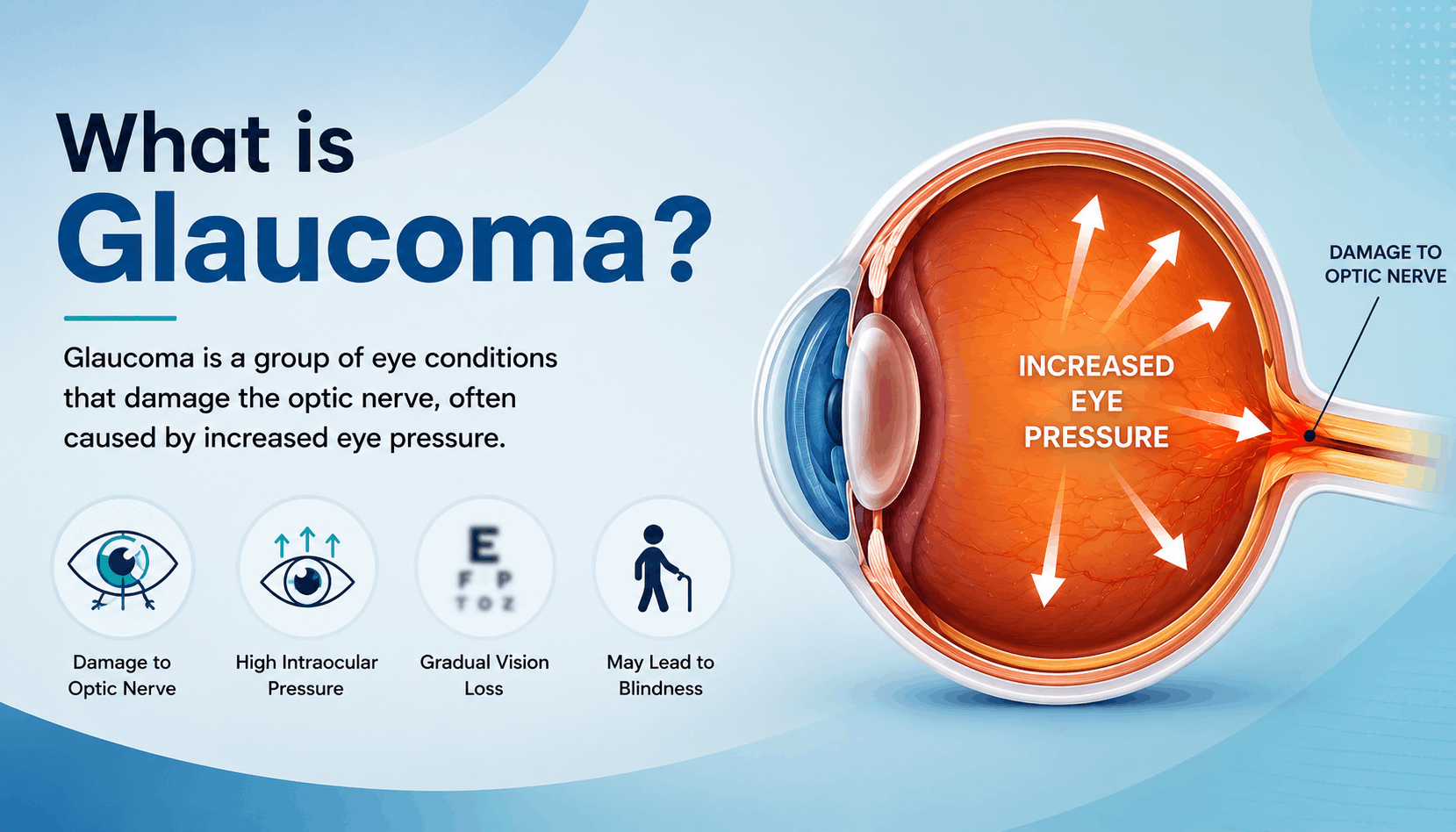
Glaucoma is a group of eye conditions that damage the optic nerve, which carries visual information from the eye to the brain. It is often linked to increased pressure inside the eye, but it can also occur with normal eye pressure. If left untreated, glaucoma can progressively damage the optic nerve and lead to permanent vision loss.
One of the challenging aspects of glaucoma is that it may not cause noticeable symptoms in its early stages. Vision loss often begins with peripheral or side vision, so people may not realize their vision is changing. As glaucoma progresses, more areas of vision can be affected. Since optic nerve damage cannot usually be reversed, early detection is especially important.
Glaucoma can affect people of different ages, but the risk generally increases with age. Studies have found that about 3.23% of people aged 40 and above in India have glaucoma. A family history of glaucoma, certain eye conditions, previous eye injuries, and other risk factors can further increase the chances of developing the disease.
What Are the Symptoms of Glaucoma?
Glaucoma often develops gradually without noticeable symptoms in its early stages. As the condition progresses, changes in vision may become more noticeable. Vision loss usually starts with peripheral or side vision, which can make the condition difficult to detect. Regular eye examinations can help identify these changes early.
Common symptoms may include:
- Gradual loss of peripheral or side vision
- Difficulty noticing objects to the side
- Blind spots in the field of vision
- Difficulty seeing in low-light conditions
- Increasing difficulty with everyday visual activities
- Vision loss that becomes more noticeable as glaucoma progresses
In some cases, acute angle-closure glaucoma can develop suddenly and cause severe eye pain, redness, blurred vision, halos around lights, headache, nausea, or vomiting. These symptoms require immediate medical attention because the condition can quickly cause serious and permanent vision loss.
What Causes Glaucoma?
Glaucoma develops when the optic nerve becomes damaged, often in association with increased pressure inside the eye. Eye pressure may increase when the fluid that normally flows through the eye does not drain properly. However, glaucoma can also occur when eye pressure is within the normal range.
The underlying cause can vary depending on the type of glaucoma. Problems with fluid drainage, changes within the eye, certain eye conditions, injuries, and other factors may contribute to optic nerve damage.
Early evaluation is important because identifying the underlying cause can help an ophthalmologist determine the most appropriate approach to managing the condition.
What Are the Risk Factors for Glaucoma?
Certain factors can increase a person’s chances of developing glaucoma. Having one or more risk factors does not necessarily mean you will develop the condition, but it may make regular eye examinations more important.
Common risk factors for glaucoma include:
- Age: The risk of glaucoma generally increases as you get older.
- Family history: Having a close family member with glaucoma can increase your risk.
- High eye pressure: Increased intraocular pressure is an important risk factor for many types of glaucoma.
- Previous eye injury: Trauma to the eye can increase the risk of developing glaucoma.
- Certain eye conditions: Some eye conditions may increase the likelihood of glaucoma.
- Long-term steroid use: Prolonged use of corticosteroid medications may increase eye pressure in some people.
- Certain health conditions: Some medical conditions may be associated with a higher risk of glaucoma.
If you have any of these risk factors, regular comprehensive eye examinations can help detect glaucoma early and allow your ophthalmologist to monitor your eye health.
What Are the Different Types of Glaucoma?
Glaucoma is not a single eye condition. It includes several types that differ in how they develop and affect the optic nerve. Some types progress gradually, while others may cause sudden symptoms. Identifying the type of glaucoma helps an ophthalmologist determine the most appropriate treatment and monitoring plan.
1. Open-Angle Glaucoma
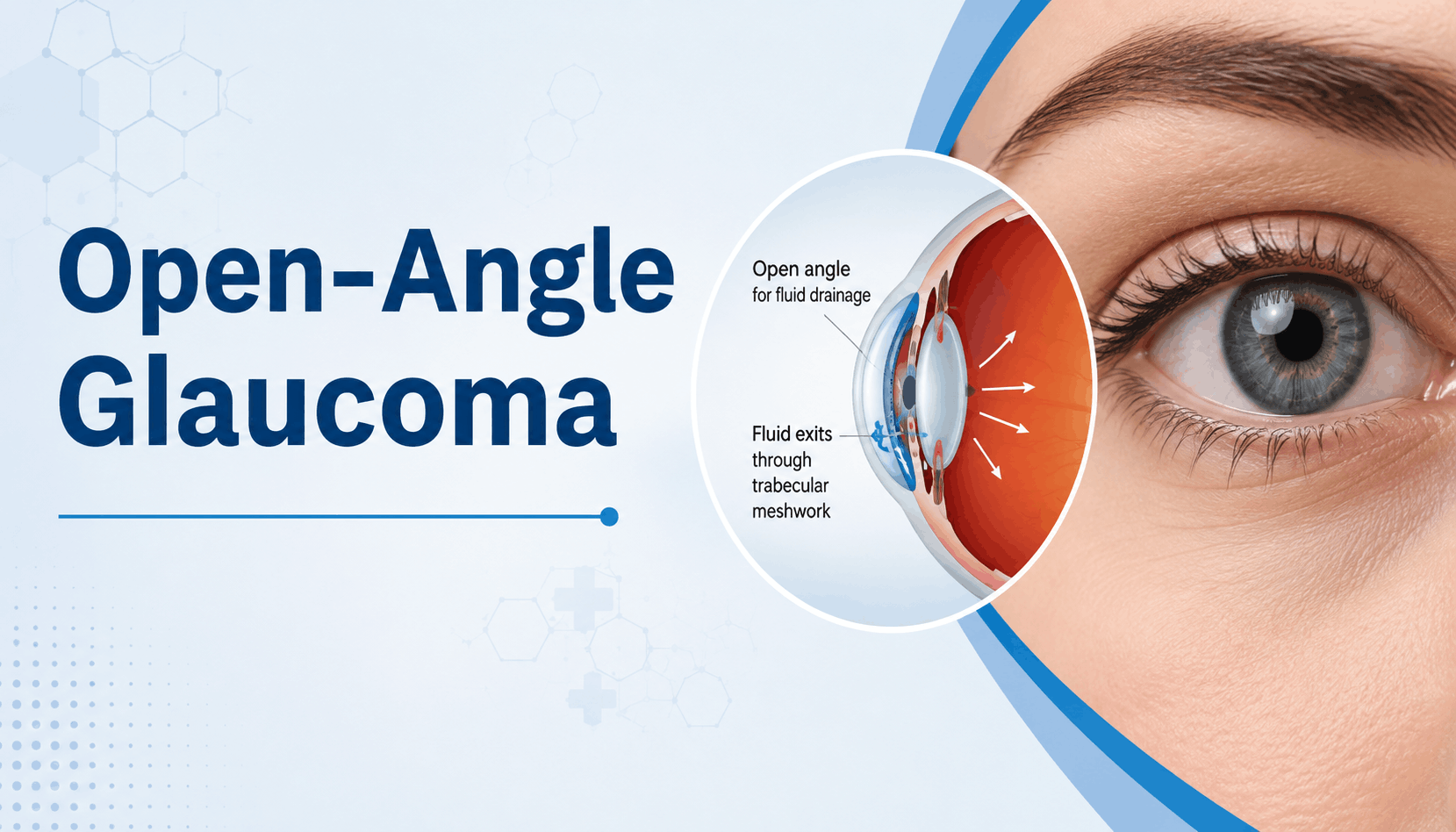
Open-angle glaucoma is the most common type of glaucoma and usually develops gradually. The drainage angle remains open, but fluid does not drain properly from the eye. It may not cause noticeable symptoms in the early stages. Over time, it can damage the optic nerve and affect peripheral vision.
Key features of open-angle glaucoma:
- Develops slowly over time.
- Often has no noticeable symptoms initially.
- Usually affects peripheral or side vision first.
- Can cause permanent vision loss if left untreated.
2. Angle-Closure Glaucoma
Angle-closure glaucoma occurs when the drainage angle becomes blocked or closes, preventing fluid from draining properly. It can develop gradually or happen suddenly as an acute attack. Sudden angle closure can cause a rapid increase in eye pressure and requires immediate medical attention.
Key features of angle-closure glaucoma:
- Can develop gradually or suddenly.
- May cause increased eye pressure.
- Sudden attacks can cause severe eye pain and blurred vision.
- Acute attacks require immediate medical attention.
3. Normal-Tension Glaucoma
Normal-tension glaucoma occurs when the optic nerve becomes damaged even though eye pressure remains within the normal range. The exact reason this occurs is not always clear. Vision changes may develop gradually without obvious symptoms, making regular eye examinations important.
Key features of normal-tension glaucoma:
- Eye pressure may remain within the normal range.
- Peripheral vision can gradually become affected.
- Optic nerve damage can occur without high eye pressure.
- Regular eye examinations are important.
4. Secondary Glaucoma
Secondary glaucoma develops as a result of another eye condition, injury, medication, or underlying health problem. The underlying condition may affect the normal drainage of fluid from the eye. Treatment depends on the cause and severity of the glaucoma.
Key features of secondary glaucoma:
- May develop after an eye injury.
- Can be associated with certain eye conditions.
- Long-term steroid use may increase the risk.
- Treatment may include managing the underlying cause.
5. Childhood and Congenital Glaucoma
Childhood and congenital glaucoma are uncommon forms that affect infants and children. Congenital glaucoma may be present at birth because of abnormal development of the eye’s drainage system. Symptoms can sometimes be noticed early by parents or caregivers. Prompt evaluation and treatment are important to protect the child’s developing vision.
Key features of childhood and congenital glaucoma:
- May be present at birth or develop during childhood.
- Excessive tearing can occur.
- Sensitivity to light may be a warning sign.
- Early specialist treatment is important for protecting vision.
How Is Glaucoma Diagnosed?
Glaucoma cannot be diagnosed based on symptoms or eye pressure alone. An ophthalmologist may use several tests to assess eye pressure, the optic nerve, and the field of vision. These tests help detect glaucoma, determine its severity, and monitor changes over time.
Eye Pressure Test
An eye pressure test, also called tonometry, measures the pressure inside the eye. Increased eye pressure is an important risk factor for glaucoma, but it does not necessarily mean that a person has glaucoma. Some people can develop glaucoma even when their eye pressure is within the normal range.
Dilated Eye Examination
During a dilated eye examination, special eye drops are used to widen the pupils. This allows the ophthalmologist to get a clearer view of the optic nerve and other structures inside the eye. The examination can help identify changes associated with glaucoma and other eye conditions.
Visual Field Test
A visual field test checks how well you can see objects in different areas of your field of vision. It is especially useful for identifying changes in peripheral or side vision, which can be affected by glaucoma. The results can also help the ophthalmologist monitor whether vision loss is progressing.
Optic Nerve Examination
The ophthalmologist carefully examines the optic nerve for signs of damage associated with glaucoma. Changes in the appearance of the optic nerve can provide important information about the condition and help determine whether additional tests or treatment may be needed.
Optical Coherence Tomography (OCT)
Optical Coherence Tomography (OCT) is a non-invasive imaging test that creates detailed images of the retina and optic nerve. It can help the ophthalmologist assess the thickness of nerve tissue and identify changes that may be associated with glaucoma. OCT can also be used during follow-up visits to monitor changes over time.
How Is Glaucoma Treated?
The main goal of glaucoma treatment is to lower eye pressure and protect the optic nerve from further damage. Treatment depends on the type and severity of glaucoma, eye pressure, and overall eye health. Although existing optic nerve damage cannot usually be reversed, timely treatment can help slow disease progression and protect remaining vision.
Glaucoma Eye Drops
Prescription eye drops are often the first treatment recommended for glaucoma. They work by reducing fluid production inside the eye or helping fluid drain more effectively. Your ophthalmologist may prescribe one or more medications based on your condition.
How glaucoma eye drops help:
- Help lower pressure inside the eye.
- May reduce fluid production or improve drainage.
- Need to be used regularly as prescribed by your ophthalmologist.
- Should not be stopped without consulting your ophthalmologist.
Laser Treatment
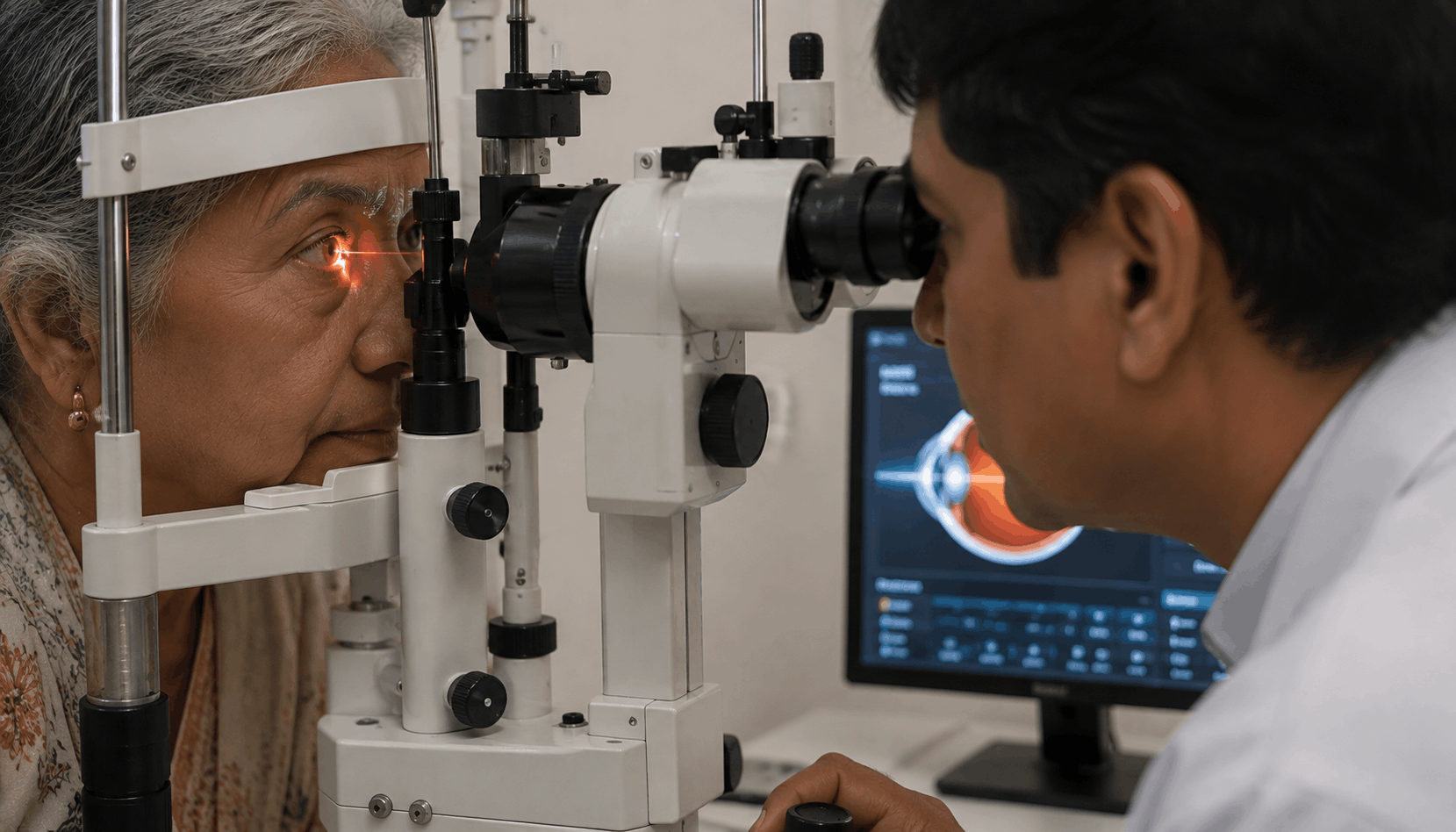
Laser treatment may be recommended when eye drops do not provide enough control or when it is suitable for a particular type of glaucoma. Depending on the procedure, laser treatment can improve fluid drainage or reduce fluid production inside the eye.
Benefits of laser treatment:
- Can help lower eye pressure.
- May improve drainage of fluid from the eye.
- Different laser procedures are used for different types of glaucoma.
- Your ophthalmologist will determine whether it is appropriate for you.
Glaucoma Surgery
Glaucoma surgery may be considered when medications and laser treatment do not adequately control eye pressure or when glaucoma continues to progress. Different surgical procedures are available to improve fluid drainage and reduce pressure inside the eye.
When glaucoma surgery may be considered:
- When medications do not control eye pressure adequately.
- When laser treatment is not sufficient or appropriate.
- When glaucoma continues to progress.
- When the ophthalmologist determines that surgery is needed.
When Should You Consult an Ophthalmologist for Glaucoma?
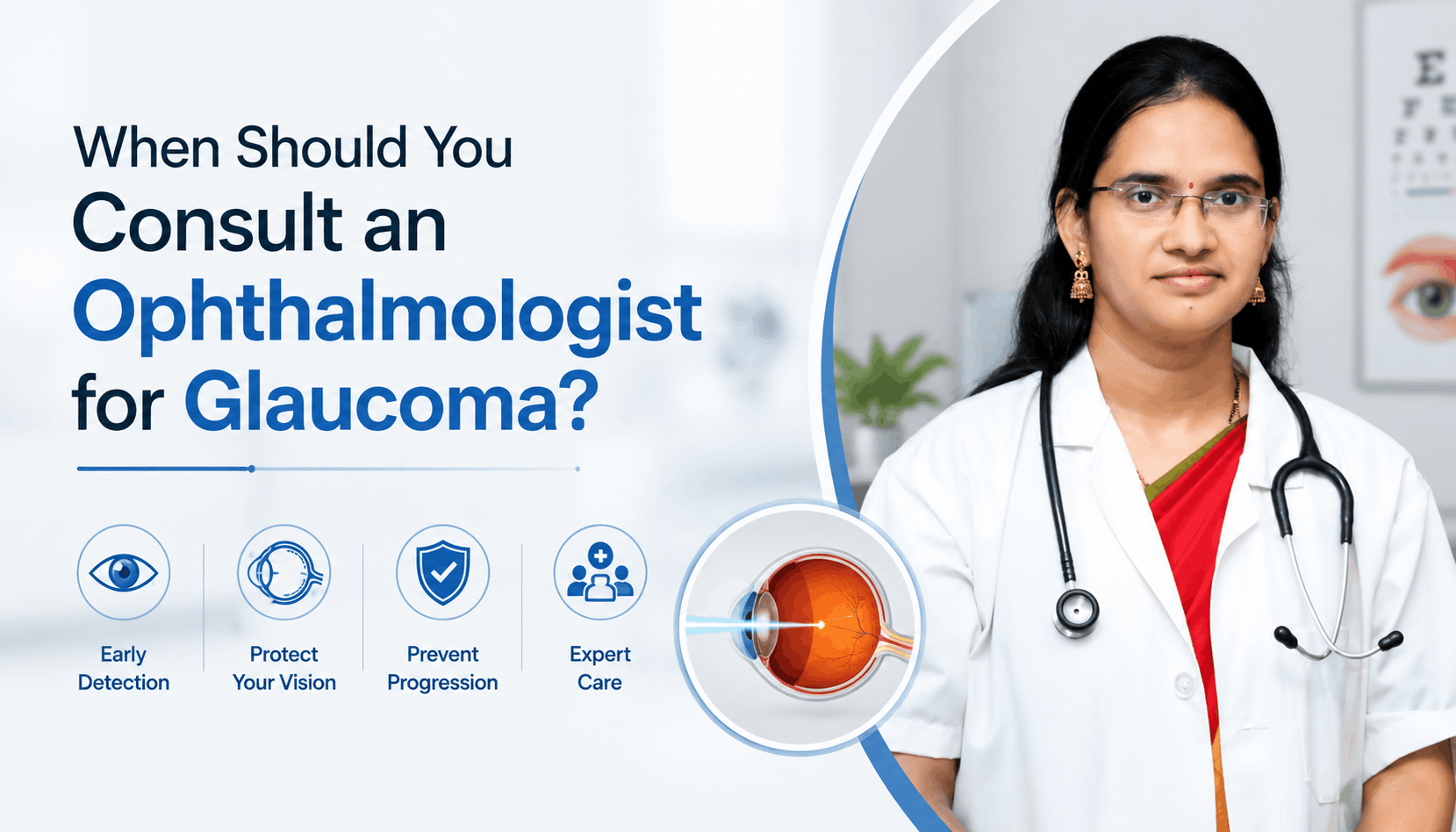
Since glaucoma can develop without noticeable symptoms, regular eye examinations are important even when your vision seems normal. You should consult an ophthalmologist if you notice changes in your vision or have concerns about your eye health.
You should schedule an eye examination if you experience:
- Gradual loss of peripheral or side vision
- Difficulty noticing objects to the side
- Unexplained changes in vision
- Increasing difficulty seeing clearly
- New or persistent visual disturbances
Seek immediate medical attention if you suddenly develop severe eye pain, eye redness, blurred vision, halos around lights, severe headache, nausea, or vomiting.
If you are experiencing ongoing vision changes or concerns about glaucoma, Dr. Nalluri Prasanthi can evaluate your eyes, identify any signs of glaucoma, and recommend appropriate care based on your condition.
Choosing the Best Hospital for Glaucoma Treatment
Choosing the right hospital is an important part of receiving appropriate glaucoma care. A well-equipped eye hospital with experienced ophthalmologists and suitable diagnostic facilities can help with early detection, accurate evaluation, treatment, and regular monitoring of the condition.
For patients seeking glaucoma care in Kandukur, Pranavi Children & Eye Hospital provides evaluation and management of glaucoma and other eye conditions. Dr. Nalluri Prasanthi, M.B.B.S., M.S. (Ophthalmology), evaluates each patient’s eye health and recommends care based on the type and severity of glaucoma.
Patients at Pranavi Children & Eye Hospital can benefit from:
- Detailed glaucoma evaluation to assess eye pressure, optic nerve health, and visual function.
- Appropriate diagnostic testing to identify glaucoma and monitor changes over time.
- Individualized treatment approaches based on the patient’s condition and treatment needs.
- Ongoing follow-up care to monitor disease progression and treatment response.
- Patient guidance and support to help maintain regular treatment and eye examinations.
For individuals looking for glaucoma evaluation and treatment in Kandukur, Pranavi Children & Eye Hospital offers comprehensive eye care with a focus on timely diagnosis, appropriate management, and continued monitoring.
Frequently Asked Questions About Glaucoma
1. What is glaucoma and how does it affect your vision?
Glaucoma is a group of eye conditions that damage the optic nerve, which carries visual information from the eye to the brain. If left untreated, it can gradually cause permanent vision loss, often starting with peripheral or side vision.
2. Can glaucoma develop without symptoms?
Yes. Glaucoma can develop without noticeable symptoms, especially in its early stages. Regular comprehensive eye examinations are important because early detection can help prevent or slow further vision loss.
3. What are the warning signs of glaucoma?
Warning signs may include gradual loss of peripheral vision, difficulty noticing objects to the side, and other changes in vision. Sudden severe eye pain, redness, blurred vision, halos around lights, headache, nausea, or vomiting require immediate medical attention.
4. Does high eye pressure cause glaucoma?
High eye pressure is an important risk factor for glaucoma, but it does not always mean that you have glaucoma. The condition can also occur when eye pressure is within the normal range, which is why a comprehensive eye examination is important.
5. Is glaucoma treatable without surgery?
Yes. Depending on the type and severity of glaucoma, treatment may include prescription eye drops or laser treatment. Surgery may be considered when other treatments do not adequately control the condition.
6. How is glaucoma diagnosed?
Glaucoma is diagnosed using a combination of eye tests, which may include eye pressure measurement, a dilated eye examination, visual field testing, optic nerve evaluation, and OCT imaging.
7. Which ophthalmologist should I consult for glaucoma in Kandukur?
If you have concerns about glaucoma or changes in your vision, Dr. Nalluri Prasanthi can assess your eye health, perform the necessary examinations, and recommend appropriate care based on your condition.
8. Which hospital provides glaucoma care in Kandukur?
Patients looking for glaucoma evaluation and eye care in Kandukur can visit Pranavi Childrens & Eye Hospital, where they can consult an ophthalmologist for appropriate diagnosis, treatment, and follow-up care
Conclusion
Glaucoma may progress quietly, but understanding the condition and taking timely action can make a meaningful difference in protecting your vision. Regular eye check-ups, early diagnosis, and following the recommended treatment plan are important for managing glaucoma and reducing the risk of further vision loss.
If you have concerns about your eye health or notice changes in your vision, consult an ophthalmologist for proper evaluation. Dr. Nalluri Prasanthi, M.B.B.S., M.S. (Ophthalmology), at Pranavi Childrens & Eye Hospital, Kandukur, can assess your eye health and guide you with appropriate care.